What I grow needs a place to go.
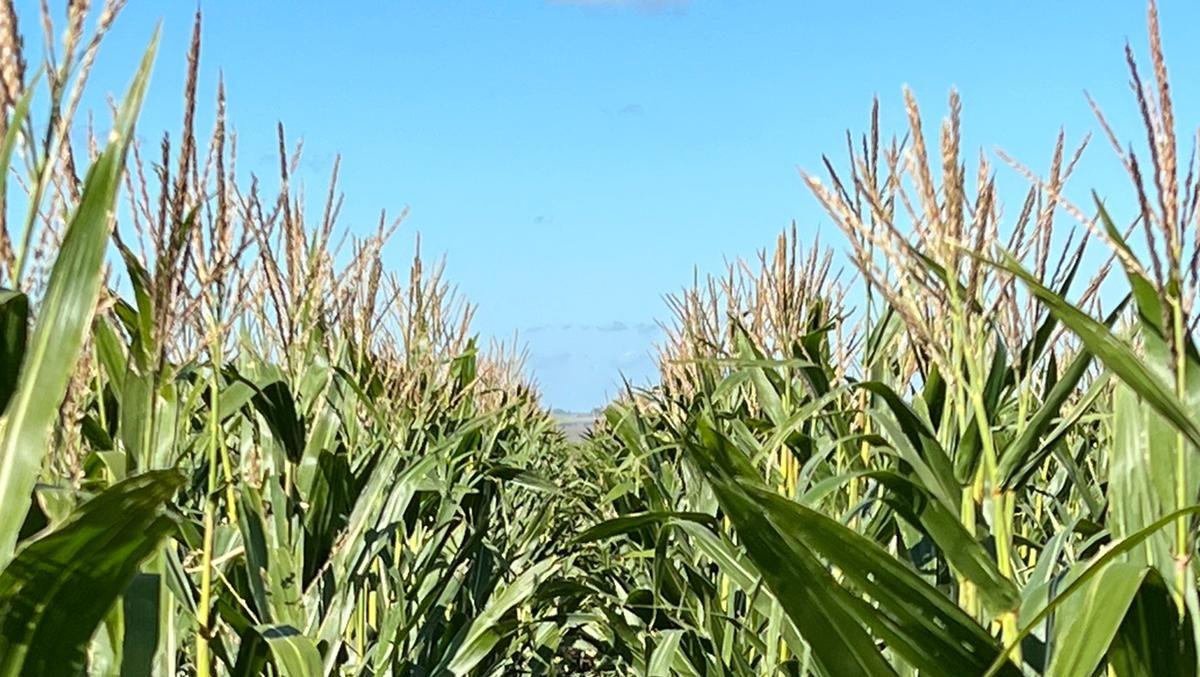
As a farmer in Iowa, I depend on domestic and foreign markets for my corn and soybeans—and I’m always on the lookout for political leaders who want to expand our opportunities.

Today, they’re in short supply, as the U.S. presidential election is making clear.
The administration of one candidate has the worst trade record in memory. The other candidate has raised tariffs in the past and promises to raise them even more in the future.
It sounds like what I grow may have nowhere to go.
Does anybody want to help American farmers? We could use it at a time when agriculture looks like it’s headed for an economic downturn.
Vice President Kamala Harris has no plan. Granted, she became an official presidential candidate suddenly and recently, following the withdrawal of President Joe Biden. Maybe she’ll develop a positive agenda and start to talk about it.
We should give her a chance.
Yet the odds are against it. She is a partner in the Biden administration and its failures, starting with the federal spending spree that propelled the rapid inflation that boosted the cost of everything, from the fuel and fertilizer that farmers need to the food that consumers buy in grocery stores.
Across four years, this administration has done little to improve the ability of Americans to export what they build and grow. The Biden-Harris team is on track to become the first administration since the advent of the World Trade Organization in 1995 not to negotiate even a single new trade agreement between the United States and another country.
This isn’t simply a matter of the Democratic party’s traditional skepticism of free trade. Previous Democratic presidents Bill Clinton and Barack Obama made deals with Canada, Mexico, Panama, and South Korea. They engaged in diplomacy with foreign leaders and then negotiations with Congress. Their hard work paid off with results that powered U.S. exports.
By contrast, the trade agenda of Biden and Harris has delivered a drought.
That’s their record, and now Harris must run on it. As she shifts from her home on the political left and tries to campaign in the political middle, however, she may want to promise to pursue trade pacts with Pacific nations, the European Union, and the United Kingdom.
Farmers like me will be waiting and watching and keeping an open mind.
Many farmers have supported President Trump in previous elections and may support him again in this one. We’ve appreciated his efforts at deregulation, tax reform, and border security.
Yet I’m scared of the trade agenda of this self-proclaimed “Tariff Man.”
His protectionist policies as president cost Americans $80 billion, according to a new analysis from the Tax Foundation, which added that this burden amounted to “one of the largest tax increases in decades.”
Although President Trump modernized our North American trade pact, his trade war with China has prompted that country to turn away from U.S. soybeans and corn, shifting its business to my competitors in Brazil.
And now he’s threatening to slap a 10-percent tariff on all imports. That’s like a $1,700 tax increase on every American household, says a report from the Peterson Institute.
For farmers, it may be worse, because we’ll suffer the most during the ensuing trade wars as history has documented when our trade partners may retaliate with their own tariffs on the crops we grow for export.
The timing is rotten, too. Everyone in farm country is already bracing for a few bad years, as input costs continue to rise and commodity prices continue to drop.
Manufacturers of agricultural equipment such as John Deere and Firestone have cut thousands of jobs in Iowa and nearby states this year.
President Trump’s running mate, Ohio senator J.D. Vance, promised in his Republican convention speech “to build factories again” and said that this election is “about the factory worker in Wisconsin who makes things with their hands and is proud of American craftsmanship.”
That’s a fine sentiment, but you can’t legislate against the laws of economics. Those factories won’t have anything to make if farmers can’t afford new tractors and tires because we’ve lost our export markets due to bad decisions in Washington, D.C.
It all comes back to a farmer’s simple truth: What I grow needs a place to go.