The attackers struck when Gunther Felsner was away from his farm. More than a dozen raiders showed up, eager to terrorize.
They represented a group called “Animal Rebellion.” They wore masks, in the way of criminals who want to escape identification by the police. They climbed onto the roof of a cattle shed and lit flares that spewed smoke in a pyrotechnic display. They also unfurled a banner: “No animal exploiter as agriculture minister.”
Felsner’s wife, who was home and beginning to feed the dairy cows in the shed, was startled and scared. She trembled “in fear of life and limb,” according to the Guardian, a British newspaper, which also reported that the trespassers claimed that their assault was “peaceful.”
Their preposterous statement recalls the infamous Orwellian lie: “War is peace.”
These were terrorists, waging a terror war on farmers.
What they did on Felsner’s farm on March 24 qualifies as terrorism, per the definition offered by the United Nations: “Criminal acts intended or calculated to provoke a state of terror in the general public,” usually for a political purpose.
And they achieved their goal. Felsner, who was a finalist to become Germany’s new Agriculture Minister, withdrew his candidacy.
This victory for terrorism is a defeat for democracy. It also delivers a blow to farmers.
I’ve known Felsner for years. We’re both German farmers with public profiles. I try to shape perceptions of farmers, mostly through storytelling. Felsner has been active in farmer associations as well as in politics. He wasn’t on his farm in Bavaria at the time of the assault because he was in Berlin, joining the negotiations to form a new government, following the national elections in February, when his party prevailed.
He would have made an excellent Minister of Agriculture, in part because he is an authentic and active farmer. As strange as it sounds, many of the people in charge of agricultural policy and food security in Germany and elsewhere don’t farm. They know little about food production and often adopt needless regulations that drive up the cost of farming for those of us who work the land and the price of food for everyone.
Now Felsner won’t have a seat at the table because of anti-farmer terrorism.
We’ve seen this type of violence before, such as when activists from Greenpeace and other professional protest groups have plundered fields and razed crops that use technologies that they reject.
Their bad behavior is incomprehensible to most people—and especially to farmers like me. We grow things, which makes us the very opposite of terrorists, who simply destroy.
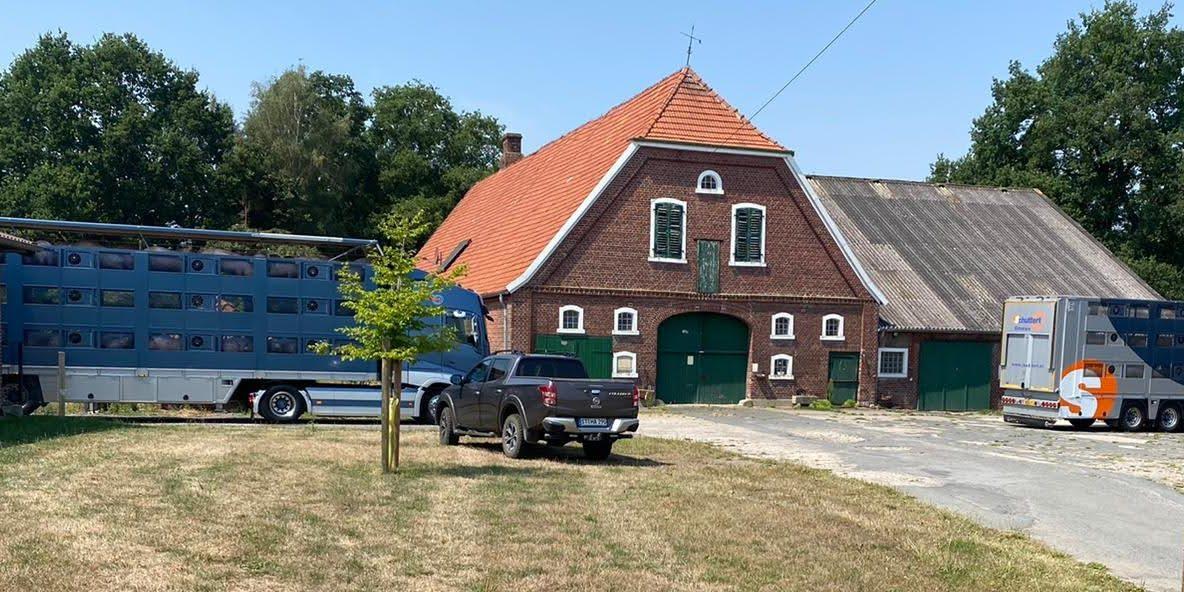
I don’t blame Felsner for quitting. Family comes first. He wants to protect his farm, where he has about 100 dairy cows and 170 hectares of land. He wants to be there if the terrorists ever try to strike again. Unfortunately, these terrorists won’t let up. Even after his resignation they continue to harass him without cause.
His loss hurts. Farmers in Germany need agricultural leadership from people -including farmers – who understand agriculture, especially as the EU begins to move away from the mistakes of the Green Deal and shift toward more farmer-friendly policies that will help us grow more food and keep grocery-store prices in check.
We’re also entering a period of profound trade uncertainty. In the United States, President Donald Trump is raising tariffs on everyone—and the EU’s new tariff rate, unveiled on April 2, is 20 percent. Nobody knows exactly where this trade war will take us, but we can expect a period of chaos involving countermeasures and retaliations whose effect will be to impede the flow of goods and services across borders.
And there is more, the EU recently negotiated a big trade agreement with Mercosur, a trade bloc of South American nations, following 25 years of talks. Farmers are still debating the pros and cons of this agreement, which must receive approval from the European Parliament and member states before going into effect.
Farmers in the EU, the United States, and elsewhere depend on global trade, so this is a key moment for us to have our voices in government.
In Germany, Felsner would have provided his—and mine.