Farmers depend on trade and technology—but neither is fully successful without trust.
Trust is the bedrock on which trade and technology sit. To move goods and services across borders, you need to trust your trading partners. To benefit from innovation, you need to trust the people who develop and use new technologies.
Farmers rely on trust in even more fundamental ways. We must earn the trust of the consumers who depend on us for food. They need to trust that we’re growing safe and healthy food as food producers but also as stewards of the land and a stable food system.
Today, the biggest threat to trade and technology—and agriculture itself—may be the widespread loss of trust in almost everything.
No matter where we live, politics feel polarized. Elections can feel bitter. Social media isn’t that social but can be a fountain of outrage. We increasingly see the world and its challenges in black and white, with no room for the greys that represent the nuances and uncertainties of real life.
Perhaps it should not be a surprise that trust has fallen across the developed world. In both the European Union and the United States, people have little trust in political leaders, government, business, the media, or the schools as much as they did a generation ago.
The good news is that most people still trust farmers. In one poll, 84 percent of Americans said they trust farmers. In a separate survey of trustworthiness in 2022, farmers scored 5.6 on a scale of 7.0, whereas government scored only 3.6.
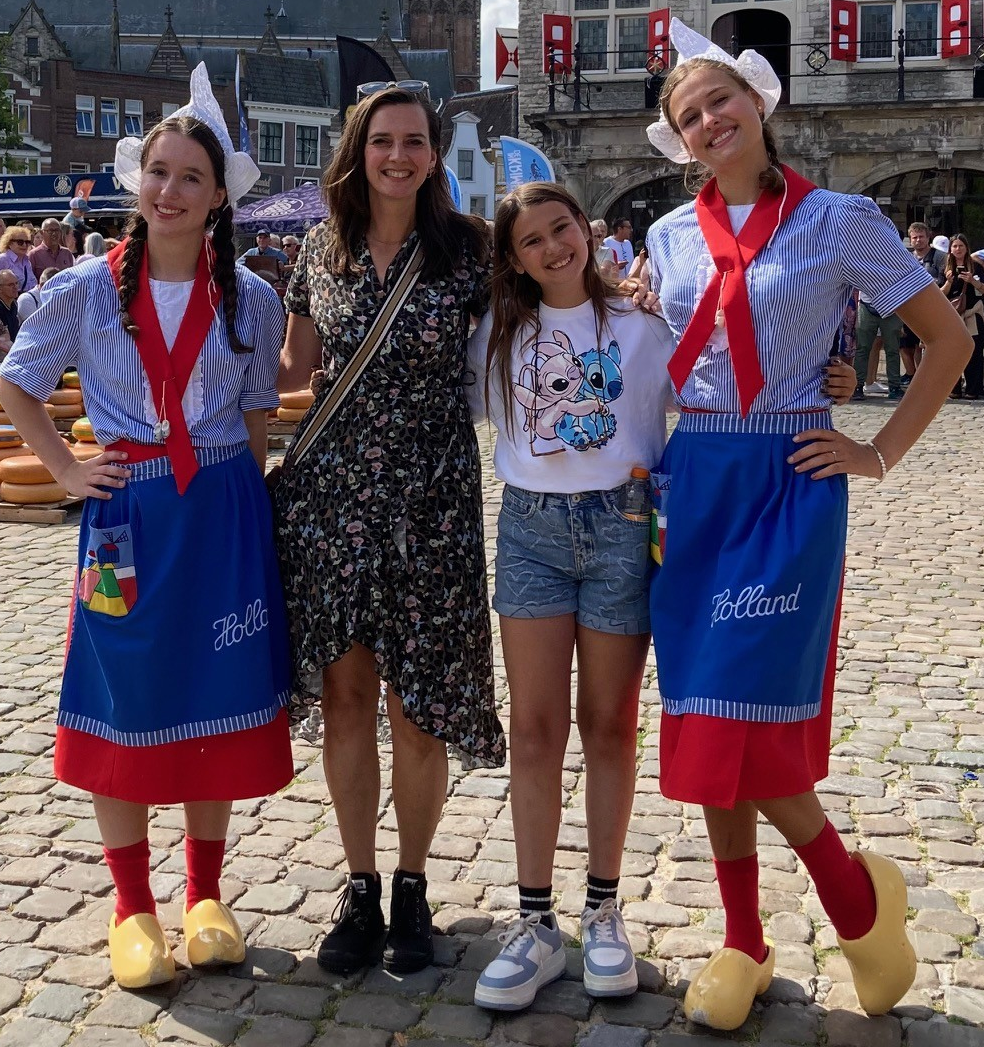
As a farmer in the Netherlands, I like to think that people trust who we are, what we do, and what we say because we’ve done what it takes to deserve it – although you might get a different impression when you open a newspaper. I know from experience, talking to visitors to our farm, that people still do trust farmers. And it is our obligation to be open to them.
Our trustworthiness gives us a remarkable opportunity and an obligation as well to speak up and join the debates over the rules, regulations, and public attitudes that surround trade and technology.
Trade is a lifeline for farmers and the consumers who depend on us. It allows us to access markets beyond our own city or country, ensuring fair prices and resilience against local market shocks. It lets me and other Dutch dairy farmers export our surplus of very good quality and safe milk, cheese and baby milk powder. Meanwhile, our nation can import bananas, which our climate won’t support but consumers still want when they shop at grocery stores.
We also need access to the best technologies, including artificial intelligence and robotics. Modern technology and tools will allow us to maximize yield and reduce environmental impact. It doesn’t matter if you are a smallholder farmer from Kenya or large commercial farmers in Australia, we need technology to make agriculture more sustainable, supporting agriculture as we adapt to challenges and build resilience. We’re already growing more food on less land than ever before, and additional progress will require an acceptance of sound science and safe technology.
If we fail to make the case for trade and technology, farmers may become the next victims in our global crisis of trust—and everyone will suffer the dire consequences.
Political scientists distinguish between “high-trust societies” and “low-trust societies.” They’ve built a large body of scholarship on this subject, which involves questions about shared ethical values, varieties of kinship, and forms of governance.
The bottom line, however, is simple: People are much more likely to flourish in high-trust societies.
Central features of low-trust societies are vast and oppressive bureaucracies as well as lower levels of prosperity.
“People who do not trust one another will end up cooperating only under a system of formal rules and regulations, which have to be negotiated, agreed to, litigated, and enforced, sometimes by coercive means,” wrote Francis Fukuyama in “Trust,” his 1995 book. “Widespread distrust in a society, in other words, imposes a kind of tax on all forms of economic activity, a tax that high-trust societies do not have to pay.”
Ordinary people may trust farmers, but they don’t all trust the people who govern us. The widespread loss of trust in public institutions has meant that farmers are losing the ability both to trade what they grow and to adopt new technologies that promote food security and conservation. We’re assaulted by the prohibitions of protectionism and more often strangled by the menace of red tape.
Farmers need allies as we support trade and technology—and in particular, we require political leaders who will make our struggle their own. We need leadership that prioritizes and can articulate shared interests and values. Open dialogue is necessary, for today and the longer term.
Farmers can play an important role as we work together with governments, private sector and consumers to build trust. This requires a willingness to listen, an open dialogue, education, and a focus on shared values.
When trade, technology and trust align, we have three necessary pillars for a resilient agriculture. This will support farmers as we do the best job we can, growing food to feed the world, protect the planet, and be the backbone of our communities.