I’m a teacher who became a farmer, but I’ve never stopped being an educator.
The transition from teaching to farming may sound like a radical career change. Yet I’m a strong believer in adopting a mindset of “and” rather than “or.” I didn’t have to choose between farming and teaching. I simply expanded my field of action. Agriculture allows me to contribute in a very concrete way to food production, while also sharing knowledge, values and purpose.
This is especially important at a time when fewer numbers of people are involved in food production, making it essential to reconnect society with agriculture. Most consumers know that food comes from farms, but they don’t know much about the business of agriculture.
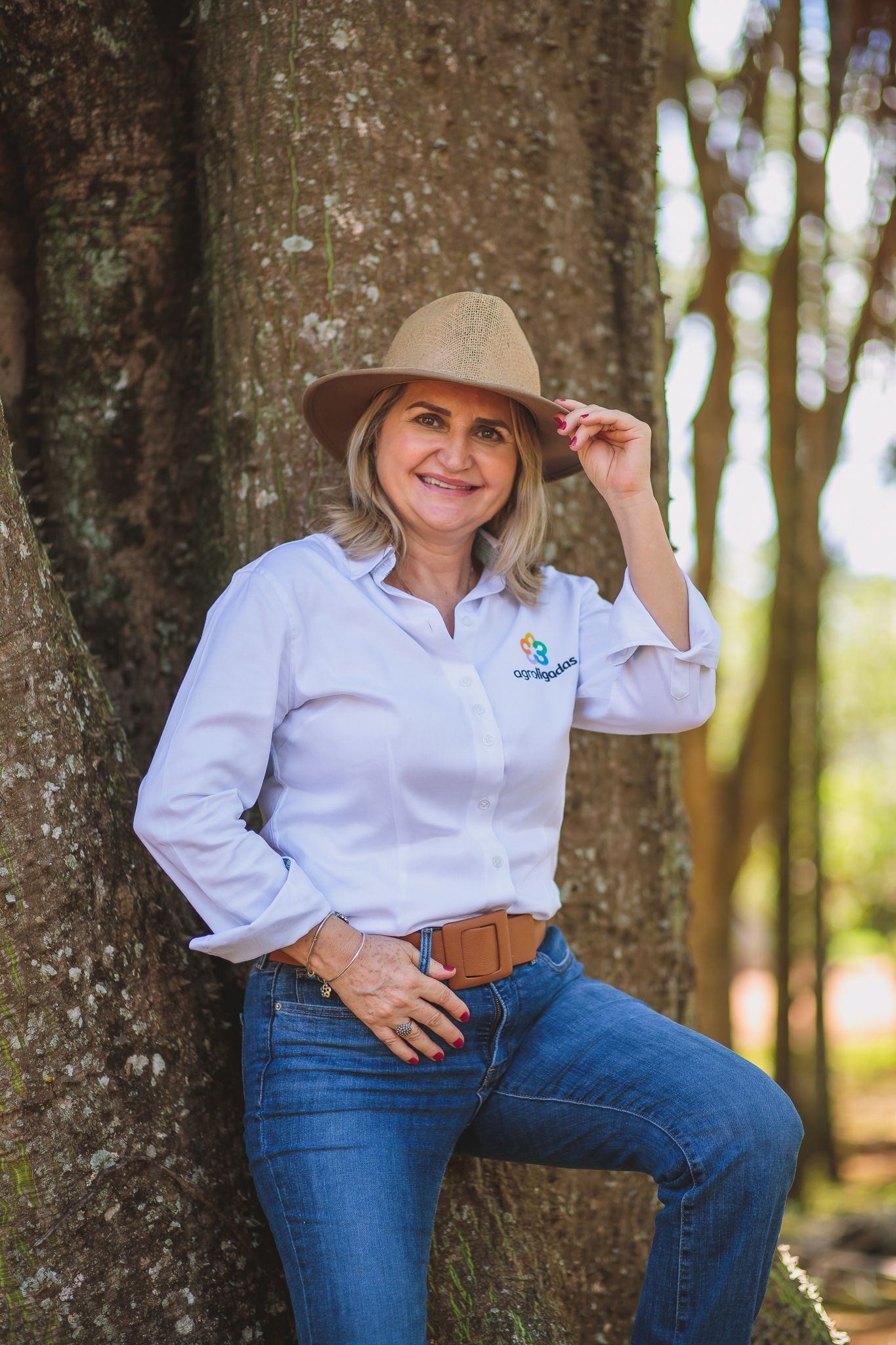
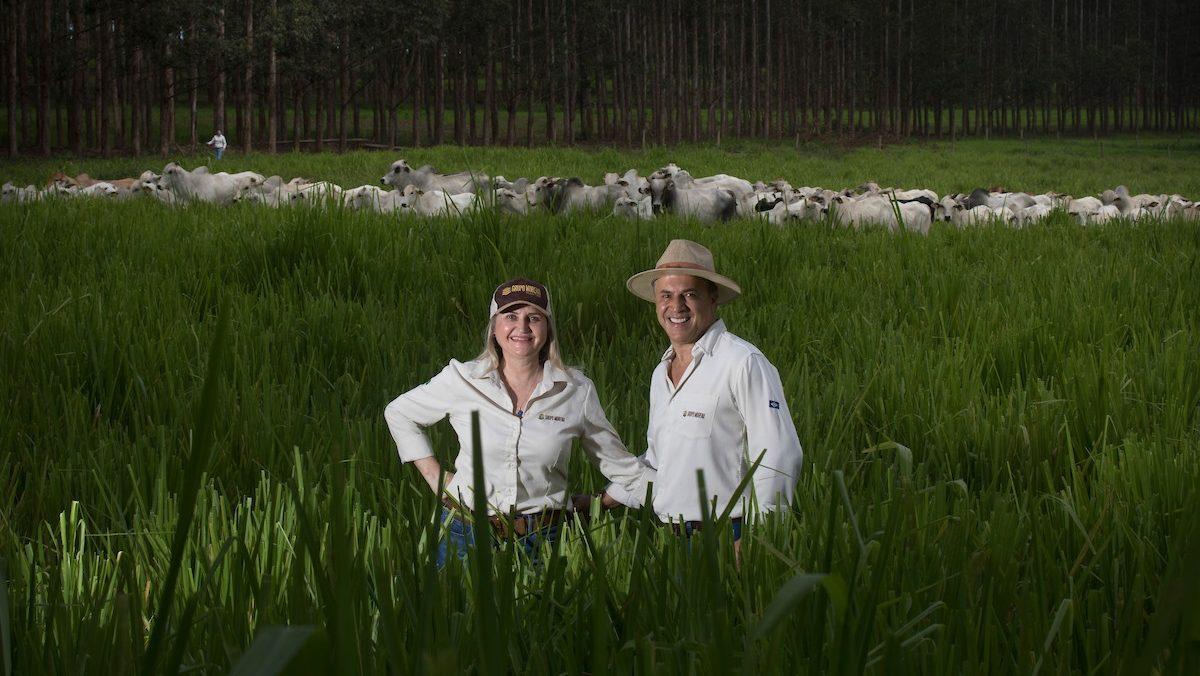
That’s where I come in. Education shapes people, forms values, and expands horizons. It can take place in a classroom with kids at desks or from a farm across the internet and through screens. It can also happen here on our farm in Brazil, where we have an open-door policy that welcomes students, professionals, and anyone who wants to learn more about what we do.
We live and work on an agricultural frontier. In a political sense, we’re in the Chapadao dos Parecis region of the state of Mato Grosso. In an ecological sense, we’re in the Cerrado, a vast region of hot and humid woodland and grassland that traditionally was thought unsuited for farming because of its poor soil.
When many people think about Brazil, they think about tropical rainforests. Those massive jungles are to our north. About 66% of Brazilian territory remains covered by native vegetation.
About 30% of our country is devoted to crops and livestock. And of this, around 20% is pastureland and only about 7 % to 8% used for crop production.

When my family moved to Mato Grosso in the 1980s, the region was still in development. I worked with children in basic education. As times changed, so did our activities. The transition to agriculture was natural. We started to plant and build. We adapted alongside everyone else in our state. Today on our farm, we grow soybeans, corn, and soybean seeds as well as raise cattle in a system of integrated production that combines crops, livestock, and forestry.
This would not have been possible just a few decades ago. The soils of the Cerrado are naturally low in fertility and acidic. They have low levels of the essential nutrients that crops need for plant development. Yet through scientific research, new technologies, and proper practices, farmers have made our area productive. We’ve corrected the soil with lime, managed nutrients with practices such as crop rotation, and adopted precision tools that allow us to monitor and conserve our resources.
We’re committed to regenerative agriculture. The foundation of this approach is no-till, which means we defend the soil with coverage rather than disrupt it with plows. This improves fertility, conserves moisture and nutrients, and allows us to grow large amounts of food in a place where it was once thought difficult or impossible.
The lesson of our region is that science, technology, and responsible management can overcome big challenges, build a highly productive agriculture system, and live in harmony with native vegetation, legal reserves, and protected areas.
As we’ve overcome the problems of the past, we’ve made a commitment to the future. For us, agriculture is not just about achieving excellent results today. It’s also about ensuring continuity over time.
We’re producers as well as stewards of the future. I like to say that businesses must be profitable and do good at the same time. We must be economically viable plus environmentally and socially responsible. That’s why our farm has adopted sustainable practices and turned to technology to improve efficiency, as we seek to grow as much food on as little land as possible.

Just as our region has evolved, so have the roles of women in agriculture. We’ve always been present, of course, but now we’re not just the support staff. The United Nations has named 2026 as International Year of the Woman Farmer, recognizing that women have gained a stronger presence in leadership. This moment creates an opportunity to give visibility to their stories, to share experiences, and for me, the opportunity to showcase the diversity of
Brazilian agriculture which spans different regions, cultures and biomes.
I believe that when a woman steps into a leadership role, she opens the door for many others. It is an opportunity to bring sensitivity, long-term vision and a strong focus on people and the surrounding environment. And this impact goes beyond agriculture. It transforms families, businesses, and communities.