The idea came to me while I was sleeping—call it a light-bulb moment about onion bulbs.
I would call myself the “Onion Doctor.”
The name implies that I’m a trusted advisor and a source of innovative solutions. It’s about diagnosing the challenges the farmers face and prescribing effective, sustainable practices that lead to better harvests and increased revenue. As a businesswoman, it signifies my deep commitment to revolutionizing onion farming in Kenya and beyond, making a meaningful impact on the lives of those who rely on this essential crop, one onion bulb at a time.
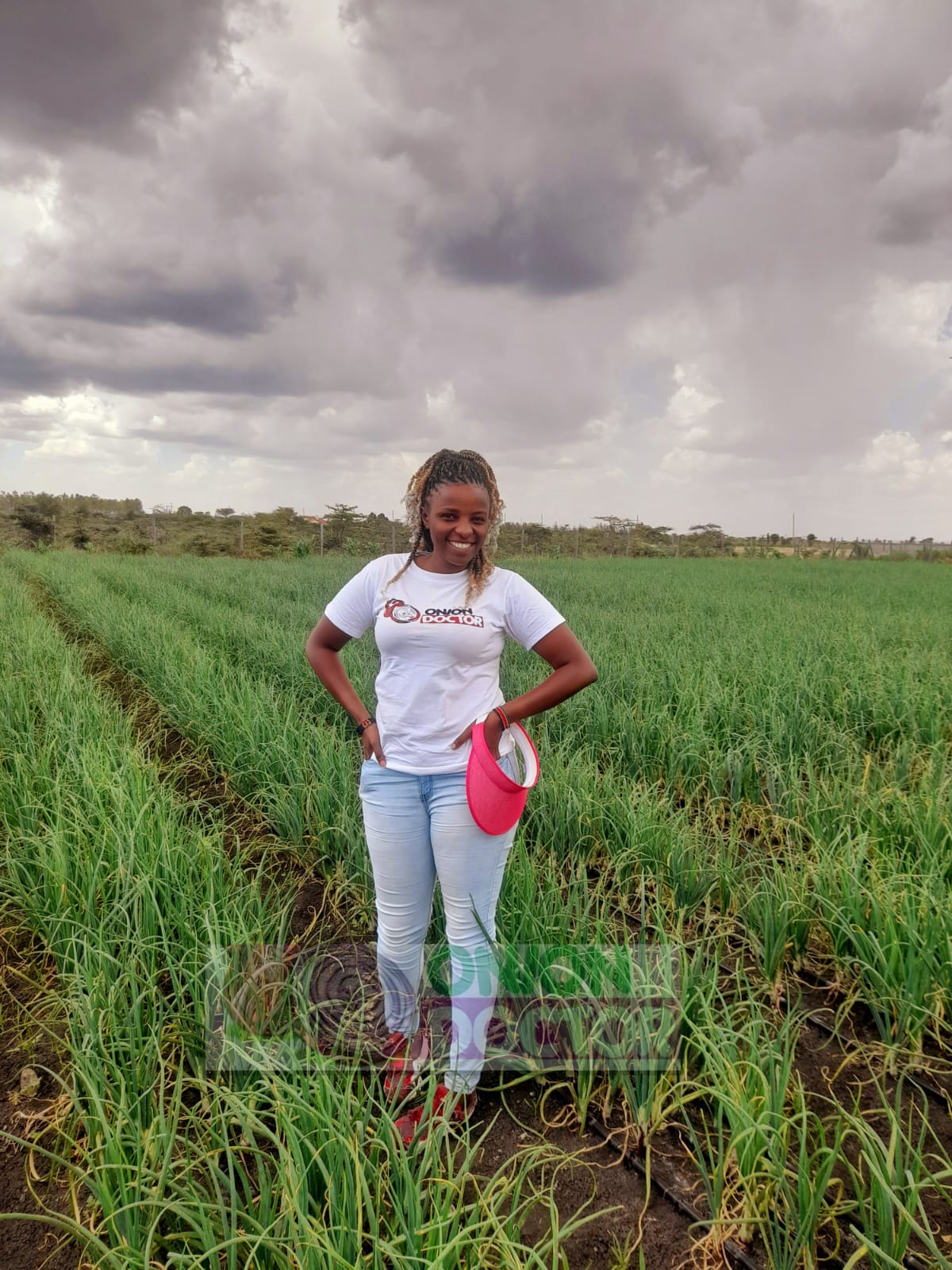
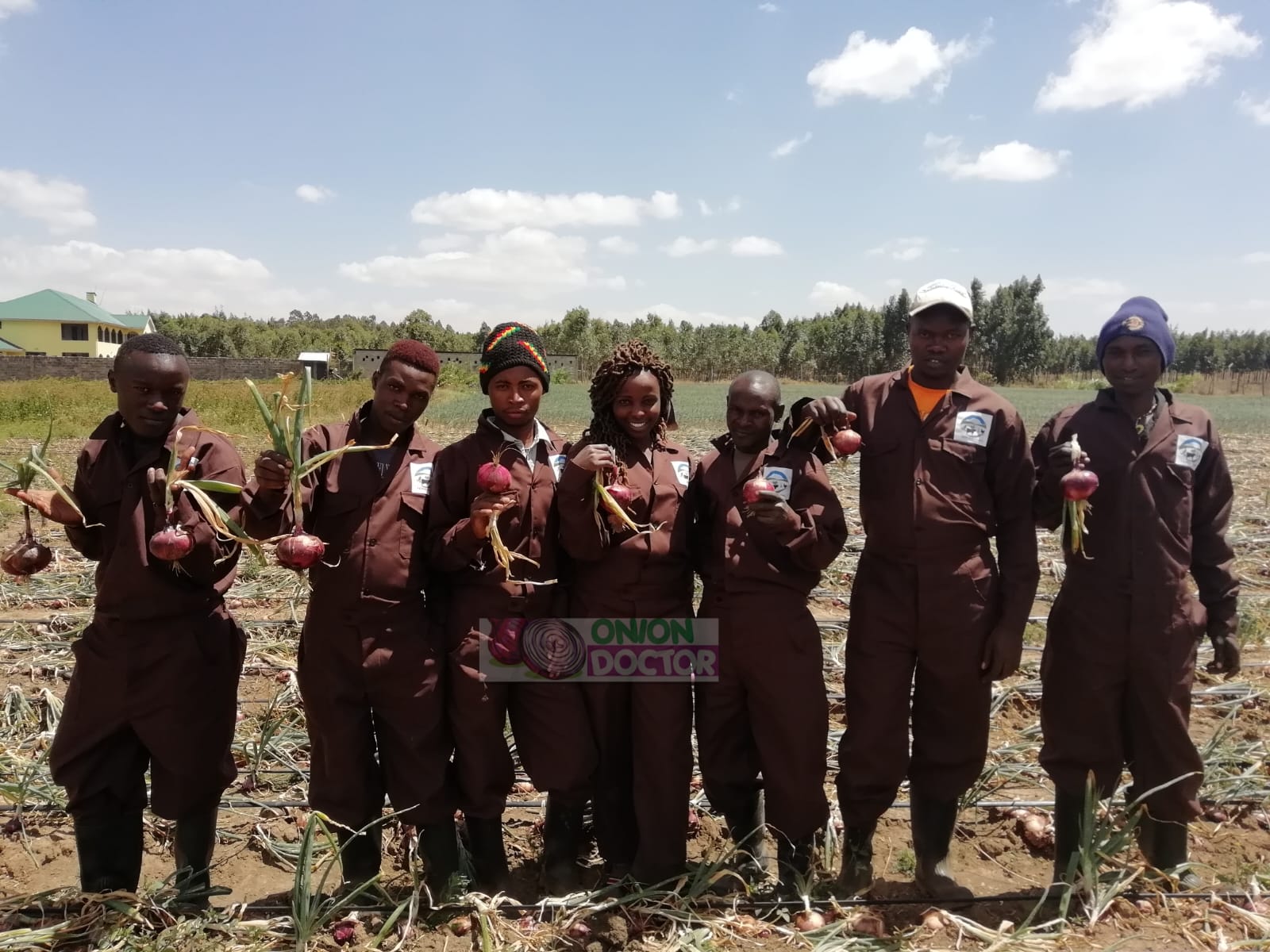
As a farmer and agronomist in Kenya—and as the Onion Doctor—I’ve worked with more than 8,000 onion farmers to provide drought-resistant seedlings, drip-irrigation systems, soil testing, solar powered I.o.T pest and disease monitoring, and market access. My goal is to help them grow more food than ever before.
The results tell the story: Working together with these farmers, we have watched their yields almost quadruple, increasing from four tons of onions per acre to 15 tons per acre, with a revenue boost of 67 percent.
At the center of my business is the belief that farmers are the foundation of the value chain. Moving anything from farm to fork involves a huge amount of effort from many players who work in everything from production to transportation to retail sales.
Farmers are the heart and soul of the value chain – the lifeblood that keeps it beating. Without them, there is no food. When they thrive, everyone benefits.
Yet they’re often overlooked or taken for granted.
I wasn’t born into a farming family, so I didn’t grow up knowing much about where food comes from. As a young girl, though, I wanted to become an entrepreneur. My mother exposed me to the world of business, and I began to read widely on wealth.
I kept asking myself: What can I do to make one Kenyan shilling each day from a million Kenyans?
For those who are interested: It takes about 130 Kenyan shillings to make a single U.S. dollar and about 140 to make a single euro.
While earning a living was what led me to pursue agriculture as a career path, what has kept me is the passion I developed. Where many people saw hard work with little reward, I saw nothing but opportunity—and a career path that has become more than a profession. Agriculture is my calling.
The typical Kenyan household eats about two onions per day. In a nation of about 12 million households (and more than 50 million people), that’s a lot of onions.
Despite this strong demand, Kenyan farmers grow only about 30 percent of the onions that Kenyans eat.
I’m all for international trade. The movement of goods and services across borders is a fundamental part of economic flourishing. Farmers everywhere depend on exports.
Yet it also makes sense, when possible, to grow food close to where people consume it—and I know Kenya can grow more onions, especially with improved technologies and the exchange of information.
I saw the benefits of knowledge transfer between farmers firsthand when I studied in Israel. I had a chance to spend nearly a year at the Arava International Center for Agricultural Training, where I learned about farming in the classroom and in the field.
I was impressed by how dry Israel is in its south—and how Israeli farmers nevertheless coaxed food from this arid region. It changed my perspective and sent me back to Kenya determined to transform the arid regions of Kenya into the food basket of Kenya.
We’re doing it with onions, introducing them to the wonders of precision agriculture, which allows us to grow more food with less water, and developing technologies that are suited to smallholder farmers.
Technology is a game-changer, but the costs of technology can be high. Farmers need better access to financing options to make advanced equipment more affordable. We also need more educational programs that increase farmer’s knowledge and skills as well as support for the research and development of local adaptations.
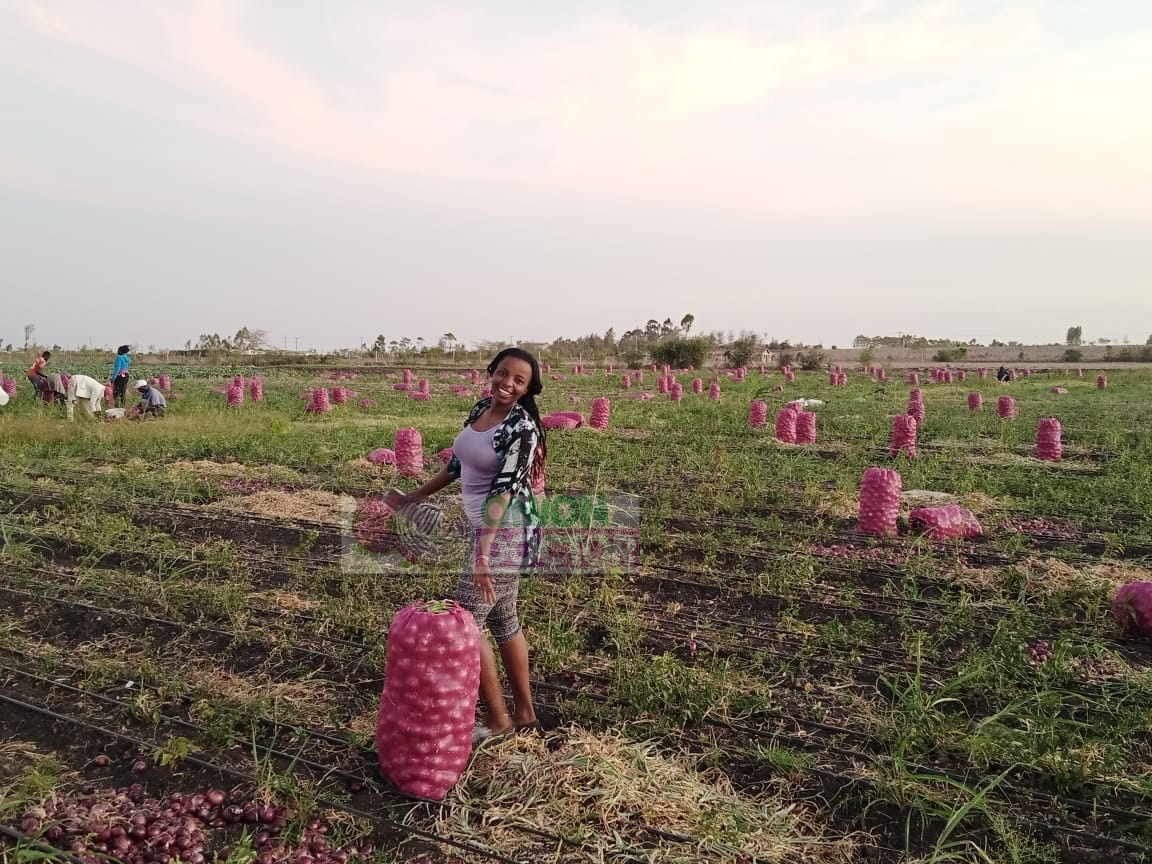
The payoff is worth it, though, because when you invest in the farmers who are the foundation of the value chain, it helps every other link in the chain, all the way to the consumer.
The chance to make a tangible difference in the lives of ordinary Kenyans drives me every day. I want to contribute to the sustainability and prosperity of our communities. I see beyond traditional barriers and embrace challenges. I strive to help farmers achieve better results and enjoy financial stability.
My grand ambition is to improve the health of onion farming in Kenya—and that’s why I’m the Onion Doctor.