Every day as a farmer, I make dozens of decisions—some big, some small. When to feed, when to treat, when to sow or harvest. Increasingly, these decisions are supported by powerful technologies. Innovations have changed how I work, and honestly, I wouldn’t want to go back.
But here's the thing: no matter how advanced the tools get; they don’t replace my gut feeling. My intuition, built up over years of working the land and caring for animals, is just as important now as it was before the age of apps and robots.
Farming today is not about choosing between innovation or intuition. It’s about knowing how to use both—side by side.
Let me start by saying this clearly: without innovation, my job would be harder, less efficient, and sometimes even impossible. The tools we have today are incredible.
Take weather apps. I use them daily to plan my work. They give detailed forecasts by the hour—temperature, wind, rainfall predictions. It helps me time everything from fieldwork to harvesting. But I’ve also learned not to rely on them blindly. A forecast might say "dry," but when the wind shifts and the clouds feel heavy, I’ll hold off. My intuition has saved me from maybe a disaster that data didn’t see coming.
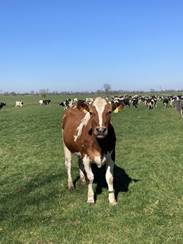
On the animal side, all my cows wear a kind of Fitbit—a tracker that monitors activity, eating behaviour, rumination, amount of milk being given and even temperature. It’s a goldmine of data. I get alerts if a cow is eating less or not moving as much. It often signals illness before there are visible signs. But sometimes, even when the data looks normal, I see something is off. Maybe she’s standing apart or looks restless. That’s when my intuition tells me to take a closer look.
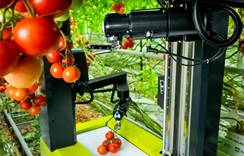
In arable farming and horticulture, we see even more advanced tools. I recently visited a tomato grower who uses robots in the greenhouse to pick ripe tomatoes. These machines recognize the exact stage of ripeness, handle each fruit gently, and work tirelessly—day and night. It’s efficient and reduces labour costs, especially in countries like The Netherlands where there is a shortage of labour. But the grower told me: “I still walk through the greenhouse every morning. Just to feel how things are growing.”
Then there’s blockchain technology. Not only do farmers want to know what happens with their products, but also more and more, consumers want to know exactly where their food comes from—how it was grown, what treatments it received, how far it travelled. Blockchain allows full traceability, from farm to fork. It’s transparent and builds trust.
In crop farming, I’ve started using a spot sprayer when treating weeds. Instead of spraying the entire field, it detects with laser only the areas where weeds grow and targets them precisely. That technology saves crop protection products, it’s better for biodiversity and saves money too. It’s brilliant. But when the sprayer skips a patch because the weeds were too young to detect, I see it. I walk the field. That’s where my eyes—and my experience—step in.
And then there’s precision farming with GPS. My tractor follows exact lines across the field, minimizing overlap and optimizing fuel use. I can apply seed, if needed fertilizer, and water to exactly the right places. This level of precision makes a huge difference. But even with GPS, I adjust on the fly. When the land feels too wet in one spot, or the soil is looser than expected, I’ll override the plan.
The next big change has also made its entrance: artificial intelligence. That will also become increasingly important, wrote Forbes magazine in a recent article. At the same time, we need to train and check AI in the right way, otherwise mistakes will be made.
All these technologies give us more data than ever. But they don’t make decisions. We do. And that’s where intuition remains vital.
For example, when a cow’s tracker sends no alerts, but I see her lying differently, chewing less—something subtle—I take a closer look. I trust the tech, but I trust my eyes too.
The future is hybrid: innovation and intuition
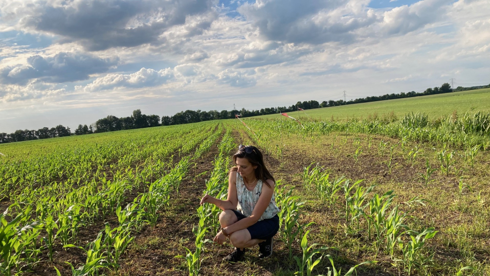
I see a lot of farmers—smart, tech-savvy, enthusiastic—diving deep into sensors, platforms, and apps. That’s fantastic. We need that energy. And still, we must walk the field. Listen to our cows. Smell the soil after rain. Those things matter just as much as the dashboard on our tablet.
True farming isn’t just about data—it’s about meaning. And meaning comes from understanding what you see, hear, and feel.
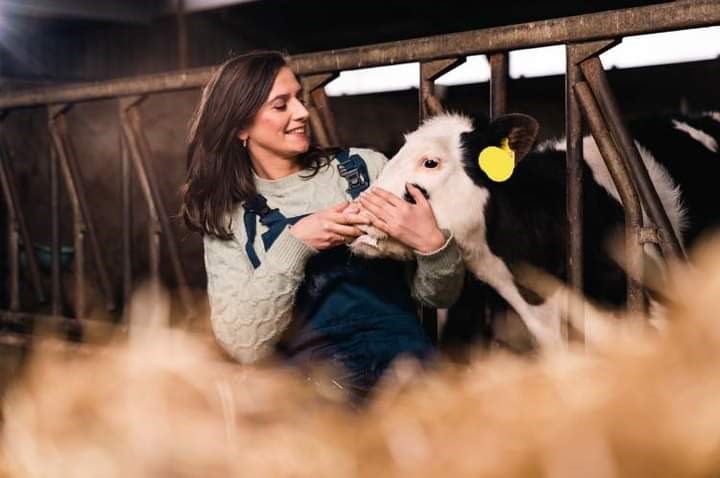
A farmer’s job is high-tech and high-touch.
The pressure on farmers is growing. We need to feed more people, reduce emissions, improve animal welfare, and stay economically afloat. Innovation gives us tools to do that better, faster, and more sustainably. We need to assure that these innovations and techniques are available for us as farmers. We need data as well in our conversation with policy makers. It is becoming more and more important to use technology and collect data. With this, we can still improve the way we farm. Not only in my country, but especially in emerging countries.
We need innovations and technology that offers guidance. But it’s intuition that tells us when, how, and why to act. I am not choosing between innovation or my intuition. I need both. And so does the future of farming.