I live and work in the Mexican state of Sinaloa, but as a farmer I’ve never felt more connected to the world and its challenges.
Customers in other countries can buy what I grow. Exchange rates alter the prices that my crops are sold for. A war on the other side of the planet can shape my planting decisions.
And there is climate change, which knows no borders—and whose effects touch farmers everywhere.
Technology also connects us, and I’ve become convinced that while technology can’t solve every problem, it can address many of them—and farmers need reliable access to the best practical applications that sound science can offer.
Here in the region known as Rio Fuerte Sur, I’m a third-generation farmer who grows corn, beans, sorghum, and mangoes. This is Mexico’s most productive agricultural area, where we can devote ourselves to just about anything: grains, fruits and vegetables, livestock, and more.
I feel blessed to farm in this place.
Yet farming is hard, and it keeps getting harder. The costs of production continue to rise, as we struggle to purchase the fertilizer and crop-protection tools that we need to feed our fields and protect crops from destructive weeds, pests, and disease.
In Mexico, we are coping with a lack of rain. Water has become scarce, and without water there’s no agriculture. Recent events have forced us to cut back on the number of acres we plant and harvest.
This is not a complaint but a reality. A life on the farm is a life of resilience. Farmers must withstand difficulties, recover from setbacks, and adapt to circumstances.
We also must seize opportunities—and for farmers in the 21st century, this means taking up new technologies that allow us to find new ways to produce more food.
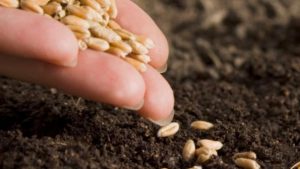
Everything starts with seeds. People rarely think of seeds as forms of technology, but that’s what they are. They are the outcome of deliberate breeding, going back to the earliest days of agriculture in the ancient world. In our time, with our sophisticated understanding of genetics, we’ve created the best seeds that farmers ever have known. They grow faster and stronger, giving us the means to feed billions of people.
Yet we need them to do more. With the right kind of science-based advances, they can help us lower the costs of production and boost the bounty of our harvests. They also can help us reduce the harms of climate change, especially if they allow our crops to become more efficient users of water.
Every seed needs help to flourish, and new precision technologies have made us more careful, accurate, and sustainable in our operations. We fly drones to collect information and deliver fertilizer and other inputs with maximum efficiency. We’ve also updated traditional machinery such as tractors and combines with digital tools such as GPS to collect data, allowing us to give our crops exactly what they need and nothing more. In addition, new methods of irrigation have helped us conserve water.
Conservation is the key to agricultural success, especially as we face modern pressures to grow more food as well as to maintain a healthy environment.
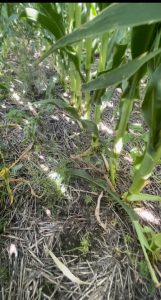
In this spirit, my farm abandoned conventional forms of tillage, which were excellent at preparing fields for planting and killing weeds—but also demanding on labor and fuel and supporting the erosion of our soil. Now we work our fields with minimal disruption to the soil while protecting the moisture and biodiversity of our fields with crop residue. The result is that we’ve discovered another way to reduce our costs, improve our harvests, and safeguard the environment. This system approach, sometimes called “conservation tillage,” is enabled by technology.
In each of these areas, I expect technology to get better.
Yet there’s nothing inevitable or automatic about improvements in seeds, machinery, and methods. Breakthroughs and knowledge transfer don’t occur on their own. Better technology is a choice we must make every day.
Seeds require research and development. Machinery needs investment and innovation. New methods demand experimentation.
Most important of all is access. We live in a time of global connections, and farmers need public policies that connect them and allow them access to the planet’s best technologies.
That’s how we all can thrive in our world of peril and promise.