Science and nature are unbeatable when regenerative agriculture brings them together—and we’ve opened our farm in Brazil to prove it.
In recent months, we’ve hosted journalists from all over the world: China, Italy, Japan, Spain, the United Kingdom, and more. They’ve wanted to investigate the connection between agriculture and the environment in advance of COP30, the UN’s annual climate change conference, which will start on November 10 in the Amazonian city of Belem.
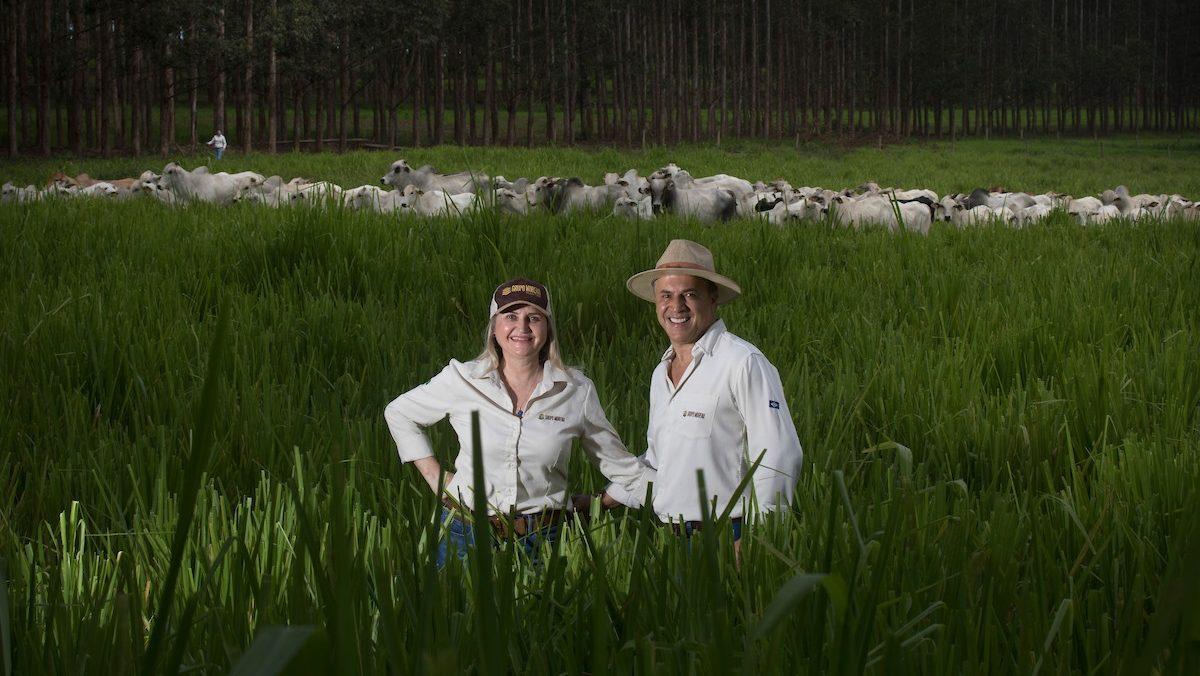
That’s far from our farm, which is about 1,600 miles to the south and near the city of Pirassununga in the state of Sao Paolo. Yet we’re a center of both food production and sustainability. We’re seeking to show what farmers can accomplish with regenerative agriculture.
One member of the media described our operation as “a living farm, in motion, where every detail of the earth seemed to tell us a story of renewal.”
This was gratifying to hear, especially because there is a broad misconception that, in Brazil, we cut down trees to grow crops. The reality is different, and our farm is an example of what farmers can accomplish when they adopt innovations such as no-till, crop rotation, and cover crops.
There’s nothing unusual about what we grow: soybeans, corn, sorghum, cassava, and sugarcane. Yet our modern approach has achieved unusual results. In our last harvest, we maintained good production but also slashed our carbon footprint. Emissions from our soybean fields were 60 percent lower than the national average. In our corn fields, they were 46 percent lower.
Regenerative agriculture made this success possible. Sustainability has become our brand.
We introduced a series of regenerative practices several years ago, but we didn’t start from scratch. My father was a visionary farmer who practiced no-till and crop rotation before they were standard—and well before the term “regenerative agriculture” even existed.
Our role is to build upon this solid foundation. We’ve added new layers of science, technology, and soil biology.
Soil is the basis of our work. Through regenerative agriculture, we strengthen soil health and structure and promote a more balanced ecosystem. We measure its carbon content—and for us, carbon is an indicator of life, not a credit generator. More carbon in the soil means more productivity.
We’ve also learned that sometimes the soil needs a rest. Our analytics alert us to plots that suffer from compaction, which means the ground has become pressed so tightly that it has few gaps for air. It’s as if the soil can’t breathe. This hurts biological activity.
One way to fix the problem is with deep tillage. It’s effective but violent. I would add I believe it is effective only for a while. Compaction will return very soon when you do it mechanically. Our no-till response is regenerative. We restore the soil with cover crops. We plant forage turnip, whose roots grow and expand and recreate the airways that healthy soil needs. No till also conserves moisture. As our fields return to health, we return them to productivity.
Crops require fertilizer to meet their full potential, but not all fertilizers are equal. We stopped putting urea on our soybeans and replaced the corn nitrogen source with nitrate, which emits considerably fewer greenhouse gases while still giving us the results we were looking for in our area. We also took up precision technologies that reduce machinery maneuvers. We’re lowering our emissions and saving money on gas.
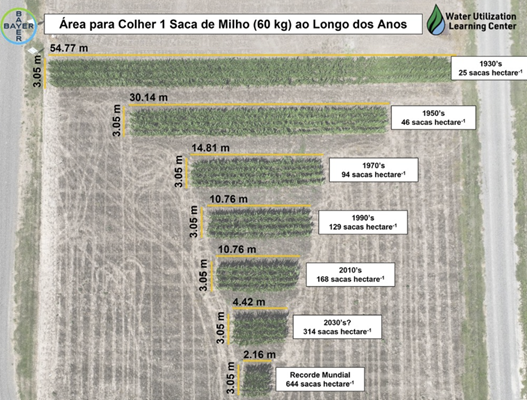
Farmers everywhere are doing more with less, thanks to science-based advances in technology. In the 1950s, it took 92 square meters of planting to produce a bag of corn. Today, due to better seed genetics and other improvements, it takes just 34 square meters.
Regenerative agriculture will help us keep this progress going. While we’ll always track the food production that is the economic lifeblood of any farm, we’re also taking new measurements that help us monitor environmental resilience.
Our results show that we’re resisting the challenge of climate change. Our production has become more stable, even in years of stress from drought or heavy rainfall. This predictability is a welcome and major benefit.
We’ve learned a lot through experience. Now we’re sharing the story of our farm with journalists who can help us spread the message of regenerative agriculture and let everyone know that farmers have solutions.