When I became a farmer here in Rwanda, I started to grow sweet bananas. They were a natural and a staple crop for my country and its climate—and back in 2015, I had high hopes for where they would take my new business.
Two years later, a sickness devastated my bananas. I had to stop growing Gros Michel/Big Mike variety that enjoyed a good market value but also was vulnerable to
Fusarium Wilt, a deadly ailment caused by fungus.
The decimation convinced me to switch to different crops that won’t suffer the same bad fate. Today I grow Hass avocados and East African Highland (green cooking) bananas.
I also wanted to understand what went wrong. My research revealed that I wasn’t alone: Fusarium Wilt has hurt farmers around the world. The fungus that causes it resists fungicide, creating a high risk for banana farmers from a disease that cannot be managed.
Yet I also learned that scientists were working on a solution that involves biotechnology, creating a natural ability within the banana plant itself to fend off the disease. It is not yet a commercial product, though it could be soon: Regulators may be on the verge of approving it for farmers in
Australia. Other countries including now Rwanda presumably would follow its lead.
This information about what sound science can do for agriculture opened my mind to innovation. I’m pleased to report that Rwanda’s public officials recently have opened theirs, too. On December 4, our parliament
passed a much-needed biosafety law that may introduce quality seeds, resistant to climate change, pressuring pests and disease, to Rwanda.
It’s about time. Like many African nations, Rwanda has a long history of refusing to adopt GMO crops. Instead, we’ve watched farmers in developing nations produce enormous harvests with this excellent technology. I saw it for myself on a visit to a farm that grows GMO maize.
In Rwanda, a farmer who grows maize can expect to produce about 1.5 tons per hectare. In South Africa—where GMOs are widely available—farmers can get 6 or 7 tons per hectare. That’s because GMO technology enables farmers to defeat weeds, pests, and disease. Crops are stronger and healthier.
Throughout Rwanda, farmers are excited about the chance to access GMO technology. We hope that in the coming months, the new biosafety law will permit the planting of a cassava that resists the
cassava brown streak virus disease, which causes this staple crop to lose its color and rot. This type of cassava has been in field trials, and it appears ready for the commercialization that the biosafety law enables.
The law also allows livestock farmers to import GMO animal feed, which will reduce the cost of raising chickens and hogs and drive down meat prices for consumers.
We’ve been debating the need for GMOs in Rwanda for years. Farmers have supported them and so have many consumers, but regulators and journalists had fallen under the influence of misinformation spread by groups based in Europe about the supposed virtues of banning biotechnology in favor of organic farms and “
agroecology.”
The disconnection is that Europeans enjoy food security. They can afford to embrace farming practices that lead to lower production. That’s a mistake, but at least it’s a choice.
Things are different in Africa. We suffer from food insecurity. Many people face food insecurity while thousands of children are malnourished leading to high level stunting.
It shouldn’t be this way. We have some of the world’s best land for agriculture. We have large pools of manpower. We should be a global breadbasket, not a hopeless continent now known for losing its youthful population dying in the Mediterranean trying to migrate to Europe.
Access to technology can help us get there. My hope is that it will help me grow from a smallholder to the operator of a medium-size farm, where I plant high-quality seeds that resist drought, pests, and disease.
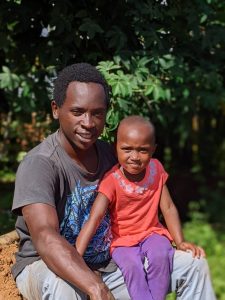
This is the path for achieving food security in Africa.
Technology is important for the future and success of agriculture in another way. Right now, we struggle to persuade youth to become farmers. Many of them see it as hard work that pays poorly. They fear that it condemns people to an archaic system that has no special promise.
With better access to technology, this will start to change. Young people will see farming not as a predicament to escape but as an opportunity to seize and build generational wealth.
Now my own future is brighter because of Rwanda’s biosafety law—and one day, maybe I’ll even get to grow GMO sweet bananas.