You’ve heard the proverb: “Give a man a fish and you feed him for a day. Teach a man to fish and you feed him for a lifetime.”
Here in Kenya, we’re applying this idea to fish farming. We’re working hard to produce the fish people want right now as well as thinking about tomorrow.
When farmers do this on the land, they call it “regenerative agriculture.” What I do in the water might be known as “regenerative aquaculture.”
But it’s the same thing: An approach to food production that seeks to satisfy the needs of the present while confronting the challenges of the future.
That’s why I recently signed the Global Farmer Network’s declaration on regenerative agriculture. Written by farmers, it promises to encourage best practices, educate policymakers who often fail to understand what farmers really do, and inform a public that is always curious about the sources of their food.
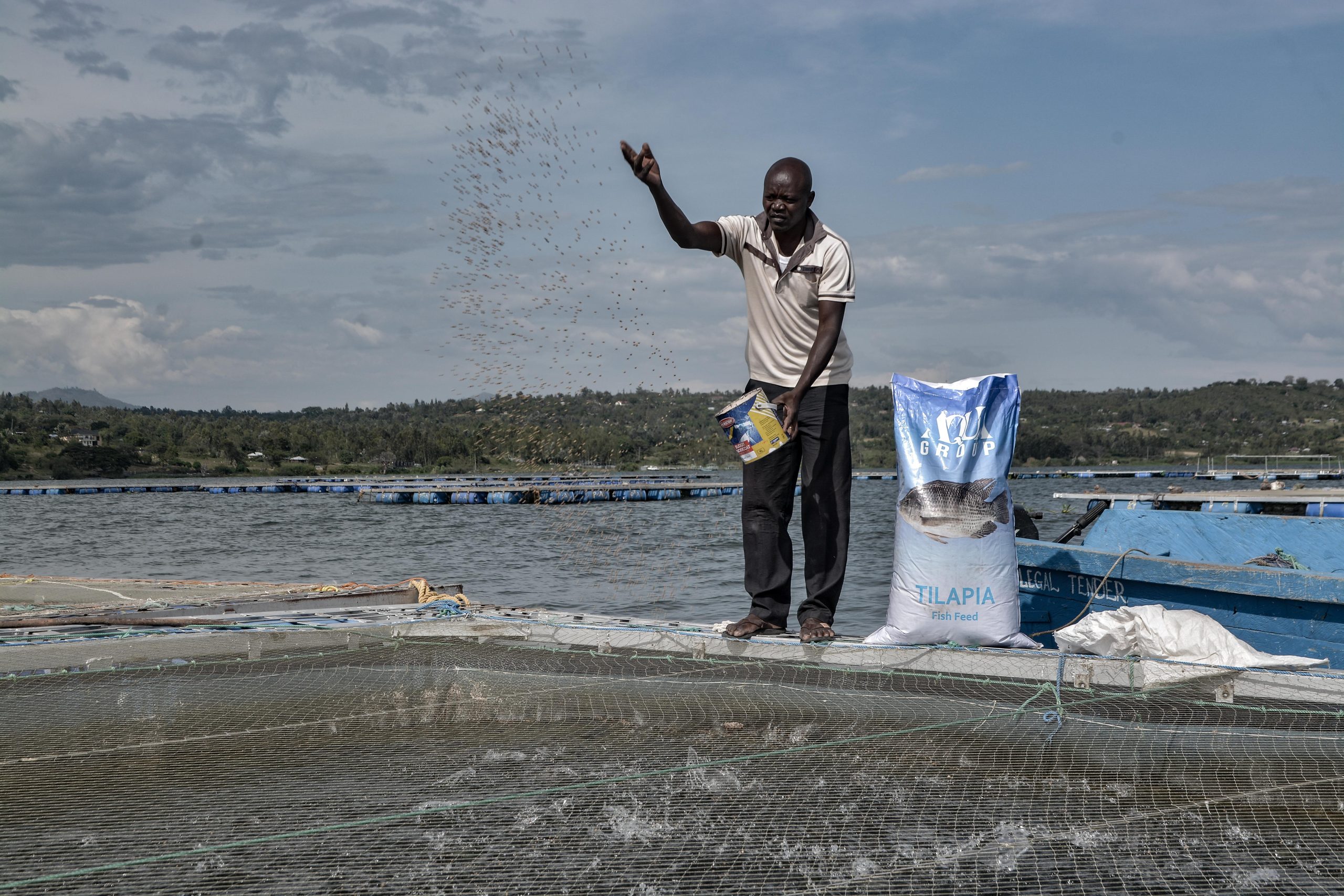
I farm about 20 tons of fish each year in African lakes and ponds. I also work with around 3,000 smallholder fish farmers, and together we’ve produced more than 7,000 metric tons of fish in the last three years. We focus on tilapia, a delicious and versatile freshwater fish with a strong global demand.
Much of my operation involves supporting my partners. I supply high-quality feed with strong feed-conversion ratios, which achieves better outputs with fewer inputs. We’ve cut production time from 13 months per fish to just eight months.
Put simply, we produce more fish protein with less fish feed.
To unlock the full potential of some farmers where access to credit is a challenge, we have partnered with a bank to provide a blended finance product, allowing farmers to access non-collateralized loans in order for them to continuously remain in production. We also connect them with businesses and consumers who want their fish.
Our methods are essential to sustainability in two ways. First, they make fish farming more profitable, and so they’re economically sustainable for the smallholders who are trying to make a living. Second, they reduce our impact on our surroundings, and so they’re environmentally sustainable for the water and land that we share with everyone.
Farmers who practice regenerative agriculture on the land devote themselves to the health of the soil. For a fish farmer like me, I practice regenerative agriculture in lakes and ponds with an eye toward the health of the water, plus the lake beds and pond bottoms below.
A lot of traditional fish feed sinks. Fish will feed on it as it descends, and some will search for it after it settles. But they can miss a lot of what we’re trying to give them. This can cause eutrophication, which describes an unhealthy accumulation of nutrients in the water as well as a depletion of the oxygen that fish breathe through their gills.
So we use special fish pellets that float. If our caged fish don’t eat them, they drift away and the wild fish do.
We’re also replacing traditional metal cages with stronger ones made of high-density polyethylene, or HPDE. They reduce pollution because they can withstand strong currents, and we can put them in bodies of water with higher waves and deeper depths. They also last longer. Metals cages require replacement after three years. HPDE cages last two decades.
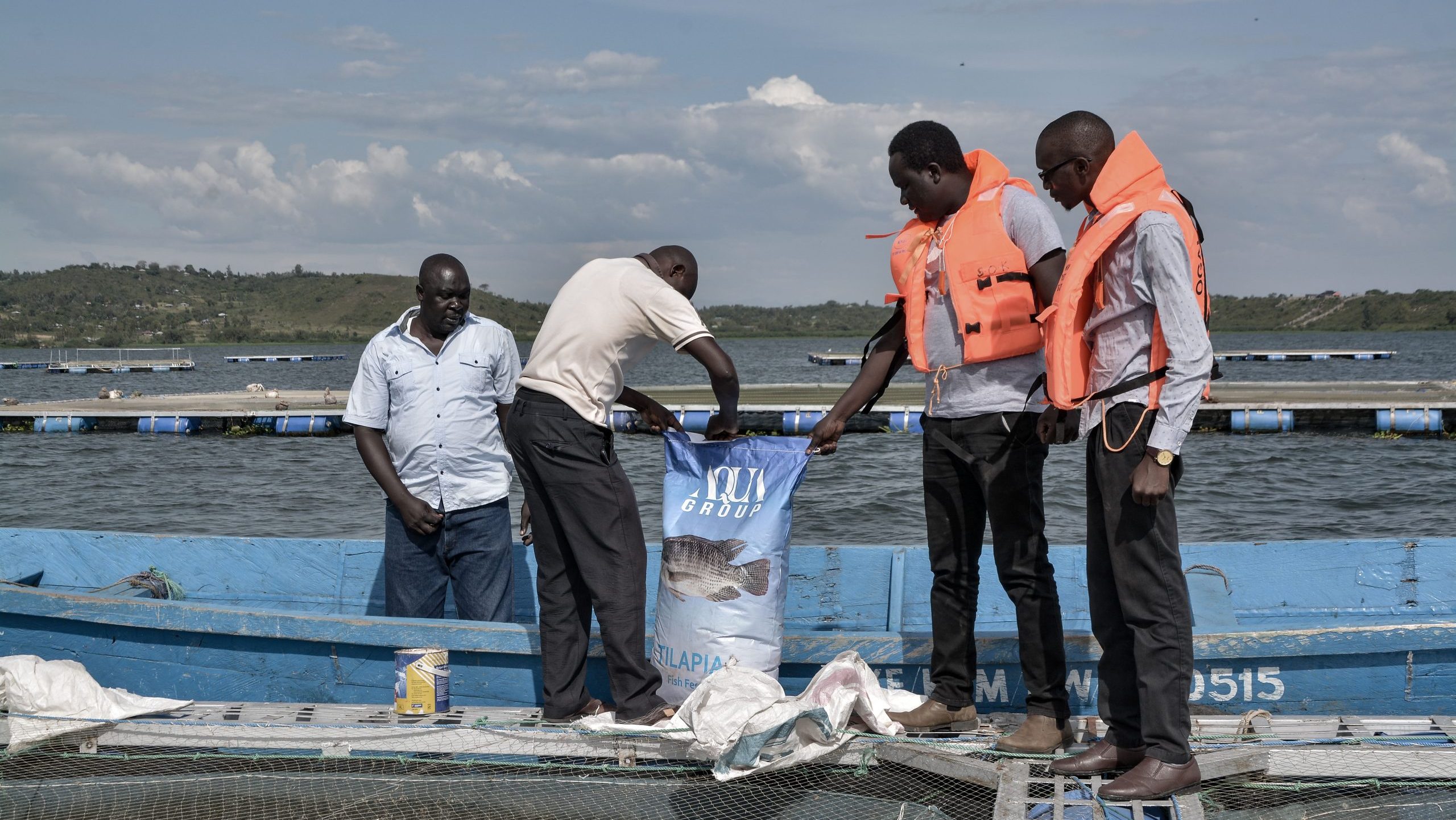
One way we know that we’re making a difference with floating pellets and stronger cages is that the water is clearer. It looks the way clean and healthy water should look.
Our regenerative practices also include precision feeding, so that nothing goes to waste, and direct market linkage, so that fish move from farms to forks with less fuel.
We spend a lot of time and effort teaching these techniques to our farmers. We want them to take up regenerative aquaculture for the sake of improved production right now and better production in the years ahead.
This makes sense not only for individual fish farmers, but also for the larger world of African food production. The population of our continent is growing. I see this as a market opportunity. I also know that if African people are to enjoy food security, the way forward involves regenerative agriculture and aquaculture as solutions to not only food security but ecosystem degradation and climate resilience
I am a believer in regenerative systems in the full agriculture sector, including aquaculture. My hope is that it continues to inspire change of the agricultural system globally in order to ensure more farmers adapt the pragmatic steps toward a regenerative agricultural ecosystem.
For today, and for the future.