I’m free to use one of the best soil-protection tools for another decade.
That’s a relief because until now, the fate of glyphosate in the European Union was in doubt. There was even a chance to ban it, in what would have delivered a devastating blow to farmers who like me who are trying to improve soil health and struggling to make a living as sustainable producers of food.
Instead, the European Commission chose to follow the science. Last month, it
renewed its approval of glyphosate. The prolonged approval is given with new limitations on the use of the herbicide – but nothing we can’t live with.
I’m pleased to say that my country’s representative—
Magnus Heunicke, the Danish Minister of the Environment—voted in favor of the extension. He obeyed the wishes of our parliament as well as the scientific facts.
Around the world, regulatory bodies have confirmed that glyphosate is safe. These include the
European Food Safety Authority, the
European Chemicals Agency, and, in the United States, the
Environmental Protection Agency.
I’m personally persuaded that glyphosate poses no threat to human health. If I weren’t convinced of this truth, I wouldn’t expose myself or my family to it. My grandkids visit our farm and play in its fields—and I’d never do anything to harm them.
Yet several of the EU’s biggest countries did not support the ten-year extension. They included France, Germany, and Italy. They chose to ignore the science and to play politics. They surrendered to anti-farming activists who sell fear.
These ideologues always point to the same old and discredited evaluation from an organization that has classified it equally hazardous as being a hairdresser or drinking a cup of hot coffee.
The commission saw through the bluster and made the right choice.
And now I can continue to make the right choice for the land on my farm.
Glyphosate is an indispensable part of our
no-till approach to agriculture. Our goal is to improve the soil by adding organic materials and to keep it healthy by exposing it to as little disruption as possible.
Here’s how it works. When we harvest in August, we leave behind the residue of the crops we’ve just grown. This lays over our fields like a blanket, protecting what lies beneath.
We also plant a cover crop of various species that grows throughout the fall. The cover crop protects against erosion. It also removes carbon from the atmosphere and feeds it into the soil. That’s good for climate change, which is fueled by carbon dioxide. It’s good for my farms productivity too, because the higher soil organic matter is a product of the increased carbon input, improving the capability of our cash crops to hold on to the nutrients available. This year those crops were wheat, barley, oats, and oilseed rape.
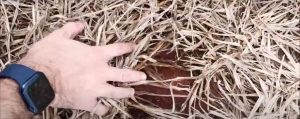
The mix of residue and cover crops enhances biodiversity above and below ground. Above the ground, overwintering birds and other kinds of wildlife find shelter and food. Below the ground, healthy microbes flourish and enrich the soil.
As we start to plant in the spring, however, we must remove the cover crop—and glyphosate allows us to do this without plowing the soil. No other herbicide can accomplish this task.
Without glyphosate, we’d have to turn back the clock and reintroduce the old-fashioned practice of heavy tillage. We’d use a mould board plough to turn over the soil. This would kill the cover crops, but it would come with harmful side effects, such as the release of moisture and damage to biodiversity. It would also cause a runoff of nutrients into waterbodies.
Glyphosate is a simple, safe, and science-based solution that allows us to take full advantage of 21st-century technologies.
We need access to these tools because there is so much pressure these days to grow more food on less land and in a sustainable way.
That’s difficult, especially during a year like 2023, when we suffered through the worst harvest in our history. The weather didn’t cooperate from the start, as a cold and wet spring delayed everything. Then the summer turned dry and hot. In July, things changed again, as we went from drought conditions to heavy rainfall. The result was a low yield. This combined with the rising costs of inputs such as fertilizer and dropping prices for commodities. We were fortunate to have sold half our crops in advance for an acceptable price.
The absence of glyphosate would have made a bad year even worse. We would have grown fewer crops, spent more time and money on controlling weeds, and harmed our soil with plowing.
Every year has its uncertainties, and we don’t know what 2024 will bring. Amid our economic and environmental challenges, however, it’s good to know that we’ll have glyphosate available as a most important tool to improve soil health in the 2030s.

 These ideologues always point to the same old and discredited evaluation from an organization that has classified it equally hazardous as being a hairdresser or drinking a cup of hot coffee.
The commission saw through the bluster and made the right choice.
And now I can continue to make the right choice for the land on my farm.
Glyphosate is an indispensable part of our no-till approach to agriculture. Our goal is to improve the soil by adding organic materials and to keep it healthy by exposing it to as little disruption as possible.
Here’s how it works. When we harvest in August, we leave behind the residue of the crops we’ve just grown. This lays over our fields like a blanket, protecting what lies beneath.
We also plant a cover crop of various species that grows throughout the fall. The cover crop protects against erosion. It also removes carbon from the atmosphere and feeds it into the soil. That’s good for climate change, which is fueled by carbon dioxide. It’s good for my farms productivity too, because the higher soil organic matter is a product of the increased carbon input, improving the capability of our cash crops to hold on to the nutrients available. This year those crops were wheat, barley, oats, and oilseed rape.
These ideologues always point to the same old and discredited evaluation from an organization that has classified it equally hazardous as being a hairdresser or drinking a cup of hot coffee.
The commission saw through the bluster and made the right choice.
And now I can continue to make the right choice for the land on my farm.
Glyphosate is an indispensable part of our no-till approach to agriculture. Our goal is to improve the soil by adding organic materials and to keep it healthy by exposing it to as little disruption as possible.
Here’s how it works. When we harvest in August, we leave behind the residue of the crops we’ve just grown. This lays over our fields like a blanket, protecting what lies beneath.
We also plant a cover crop of various species that grows throughout the fall. The cover crop protects against erosion. It also removes carbon from the atmosphere and feeds it into the soil. That’s good for climate change, which is fueled by carbon dioxide. It’s good for my farms productivity too, because the higher soil organic matter is a product of the increased carbon input, improving the capability of our cash crops to hold on to the nutrients available. This year those crops were wheat, barley, oats, and oilseed rape.