Corn is such an amazing product that you can even build a palace with it.
If you don’t believe me, check out the Corn Cam and see a live picture from Mitchell, South Dakota, where the locals decorate a building each year with corn. They call it the “Corn Palace.”
Corn has more than four thousand uses. There’s the familiar practice of eating it, and all the ways we do that: on the cob, in cornbread, in cereal corn flakes, and so on. Then there are the unexpected applications, such as turning its starch into wallpaper glue.
Last week, the Illinois farmer Dan Kelley—my friend and colleague at the Global Farmer Network—was inspired by the late economist Milton Friedman to describe the global effort behind growing a single kernel of corn. [It Takes a ‘Global Village’ to Produce a Kernel of Corn]
This week, I’m going to describe the global opportunity that each kernel of corn represents.
My usual approach is to perform a corn farmer’s version of show and tell. You’re probably familiar with this favorite activity of elementary school teachers: Students bring in items from home, talk about them to their classmates, and—here’s the key part—show the actual object.
My object is a wooden rack that holds nine vials, each filled with a different example of what a corn plant can become. It lets me play show and tell with audiences that range from curious kids to government officials.
A friend of mine built the first version about 15 years ago in my garage. Each of these educational tools carries a small plaque: “Cracking the Kernel.” The racks show what becomes of the more than 15 billion bushels of corn that American farmers harvest in a typical year.
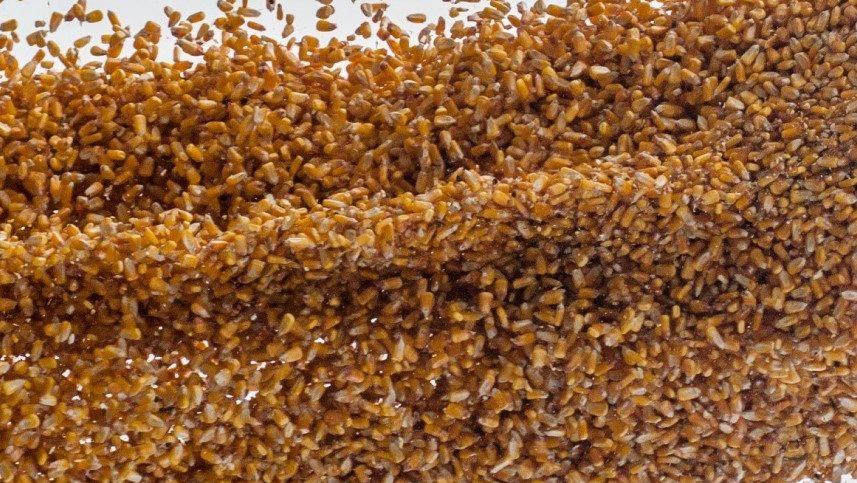
The first vial is always full of yellow corn kernels. This is the content that everyone recognizes because it’s food. Yet less than 1 percent of the corn grown in the United States is the sweet corn that Americans love to eat. In total, about 8 percent of the annual corn crop becomes food for people: cornmeal, corn flour, and so on.
Close to half of our corn harvest is for livestock—in other words, it feeds the animals that produce additional food for people, in the form of meat and dairy products.
The next vial on the rack is labeled “MOG,” for “material other than grain,” which means every part of the corn plant except for the kernel: the cob, the leaf, the stalk, and so on. It looks like the tan, dried-out residue often seen on farm fields after harvest. Farmers want nothing to go to waste, and we’ve found ways to turn MOG into animal feed.
The third vial is full of corn stover pellets—a compressed, cylindrical piece of biomass made from MOG. It can burn in boilers. Applying water will break it down, allowing it to become animal bedding in barns and sheds.
The fourth vial is hominy, which looks like a white flaky material. It comes from the heart of the corn kernel, and it’s a basic ingredient for food such as grits, succotash, and pozole, which is a Mexican stew.
The fifth vial contains what looks like a dull yellow mustard. This is the corn syrup used in baking and as a sweetener for soft drinks and other products.
Other vials on the rack show how corn can become biofuel—an important source of energy that can power vehicles.
A full accounting of corn’s many applications would take a lot more than nine vials, of course, but our racks of nine prove the point: We make a lot of things with the corn that farmers grow.
We’ve built and given away more than 150 of these racks. Today, they sit in display cases in schools and on the desks of a number of U.S. senators, Congressmen and appointed officials in our state and national capitols.
We also should note that corn is an important export product: In 2025, about 18 percent of U.S.-grown corn was exported, with Mexico, Japan, and Korea as the top destinations. This is why international trade matters even to farmers in landlocked states: What we sell to the world is a vital part of our livelihood.
Farmers put a lot into each corn kernel—and we do it because it allows all of us to benefit so much from everything each single corn kernel offers.