I like to plant trees on Earth Day.
They keep nature green and provide shade, which is a comfort on hot afternoons here in Tanzania.
And as I incorporate agroforestry in my farming strategy by intercropping trees with my crops, they help me grow food, protect the soil from erosion, and enhance biodiversity.
Best of all, trees improve our future because they’re a part of my plan to inspire and build a new generation of farmers.
A year ago on Earth Day, which always takes place on April 22, I hosted a group of students on my farm. I gave them a tour, showing them what farmers do and why it matters. Then we planted fruit trees.
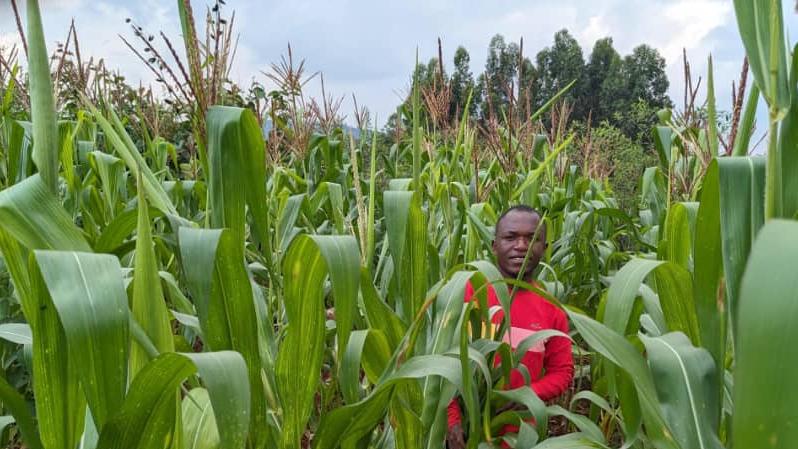
Those trees are now a part of my farm, which produces pineapples, mangos, and oranges as well as corn on about 15 hectares near Kabanga Village, close to both Lake Tanganyika and the border with Burundi.
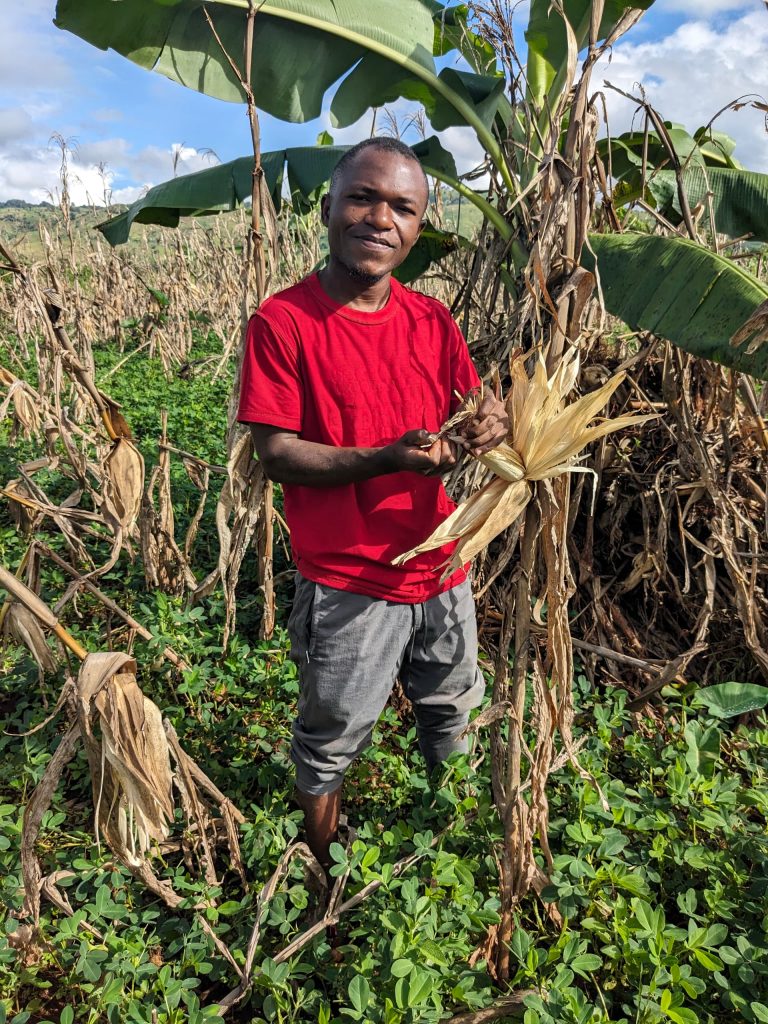
I come from a farming family, so going into agriculture for me was a natural choice. Now I’ve been at it for a decade. I expect to spend the rest of my years growing food and feeding people.
My passion is to feed my community. I also want to prevent hunger, which is the cause of so much malnutrition and death in Africa. Finally, I’m motivated by the words of Genesis 2:15: “The Lord God then took the man and settled him in the garden of Eden, to cultivate and care for it.”
Cultivating my farm means looking after its daily tasks of planting, watering, and tending to the crops as they grow and ripen. Caring for my farm means making it sustainable for the future, through innovations that protect the soil, conserve resources, and improve the environment.
We use cover crops to guard the ground, reduce erosion, and boost fertility. The traditional practice of crop rotation also helps with soil health. For crop protection, we rely on natural pesticides. And to conserve water, we have a system of drip irrigation that delivers what my crops need, in the right amounts and at the right time.
Then there are those trees, which I enjoy planting on Earth Day, with the kids on hand and the future in mind. My farm practices intercropping, which is a regenerative technique that allows trees and crops to flourish together, in ways that enhance production and protect the environment.
One of the reasons that I work with children is to encourage them to think about lives in agriculture. Some resist it because they’ve bought into the myth that farming is for rich people. Yet the vast majority of farmers in Tanzania and the rest of Africa are like me, working on small farms. It’s good for young people to see this reality.
They also need to understand how much science and technology goes into modern agriculture—and how much more we’ll be able to do with access to cutting-edge tools such as gene-edited crops that can survive the stress of droughts and strive to defeat the pests, weeds, and diseases that threaten our food supply.
Our future depends on it, especially as we confront climate change.
In Tanzania, we’ve recently witnessed the threat up close. Massive flooding in the eastern part of the country has left 58 people dead and more displaced.
April is a rainy season, but this year the rains were a deluge, due to the El Nino weather phenomenon. One group claimed that climate change made the rain in Tanzania this year twice as intense as it should have been.
Other regions of Tanzania have suffered the opposite problem: a lack of rain, leading to food insecurity. The challenge on my farm has been irregular rainfall, requiring me to adapt with new planting schedules and crop selection.
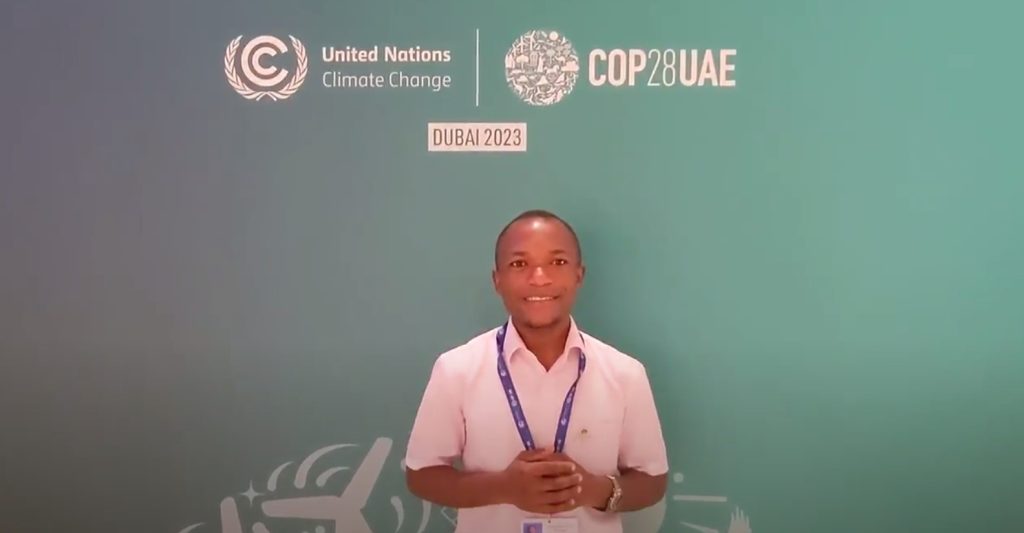
The solution to the problem is to build resilience through trade and technology plus the finances that make them possible. This is the farmer’s message I’ve tried to bring to the world, through my participation at events sponsored by the United Nations, such as the COP28 meeting in Dubai last year.
Back home on my farm, I’m doing what I can with the trees and the kids—on Earth Day and every day.