 After just a few days of training, they were ready to return to their farms with the energy to try new approaches to growing crops as well as to use their voices to benefit everyone in agriculture.
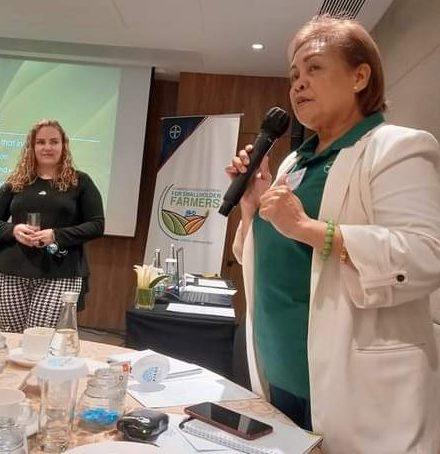
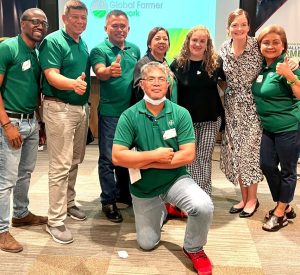 That’s what took me to Indonesia last month, for a mentorship meeting with Asian farmers, supported by the GFN and its partners. These smallholders arrived in Jakarta from nearby countries, and they were exactly what I’ve seen so many times and in so many places before: Hardworking men and women who nevertheless were timid and often lacking information and ideas that would support their efforts to be profitable and productive, be knowledgeable in adaptation and mitigation to climate change and be an inspiration to each other.
They certainly don’t spend much time at the kind of workshops I help with and often speak at. The root of the problem may be that too many farmers fail to think of themselves or their profession with dignity, feeling less fortunate and not proud to be a farmer.
When young people see these doubts, they want nothing to do with agriculture. To them, farming is difficult, dirty, and poorly compensated. These stereotypes push them away from careers in what is a beautiful and rewarding profession.
Everyone needs to see agriculture for what it is in the 21st century: a sector full of innovation and technology, involving the massive amounts of science that go into the best seeds, the crop-protection products that defeat pests, weeds, and disease, and the precision-guided equipment that both conserve resources and allow crops to flourish.
At a time when the planet’s population has surged past 8 billion people and we all confront the challenges of climate change, we need smart and innovative farmers who grow more food on less land than ever before.
We need not only outstanding farmers, but also farmers who can become “agvocates.”
Farmers face many traditional problems, such as weather that can be too hot or too cold, too wet or too dry. One of the biggest challenges they face, however, is new: We must confront lawmakers, bureaucrats, and consumers who are vulnerable to scientific misinformation because they lack a basic understanding of where food comes from and how farmers produce it.
That’s what took me to Indonesia last month, for a mentorship meeting with Asian farmers, supported by the GFN and its partners. These smallholders arrived in Jakarta from nearby countries, and they were exactly what I’ve seen so many times and in so many places before: Hardworking men and women who nevertheless were timid and often lacking information and ideas that would support their efforts to be profitable and productive, be knowledgeable in adaptation and mitigation to climate change and be an inspiration to each other.
They certainly don’t spend much time at the kind of workshops I help with and often speak at. The root of the problem may be that too many farmers fail to think of themselves or their profession with dignity, feeling less fortunate and not proud to be a farmer.
When young people see these doubts, they want nothing to do with agriculture. To them, farming is difficult, dirty, and poorly compensated. These stereotypes push them away from careers in what is a beautiful and rewarding profession.
Everyone needs to see agriculture for what it is in the 21st century: a sector full of innovation and technology, involving the massive amounts of science that go into the best seeds, the crop-protection products that defeat pests, weeds, and disease, and the precision-guided equipment that both conserve resources and allow crops to flourish.
At a time when the planet’s population has surged past 8 billion people and we all confront the challenges of climate change, we need smart and innovative farmers who grow more food on less land than ever before.
We need not only outstanding farmers, but also farmers who can become “agvocates.”
Farmers face many traditional problems, such as weather that can be too hot or too cold, too wet or too dry. One of the biggest challenges they face, however, is new: We must confront lawmakers, bureaucrats, and consumers who are vulnerable to scientific misinformation because they lack a basic understanding of where food comes from and how farmers produce it.
 The only way to overcome these fears and ignorance is through a program of public education led by farmers who can speak the truth about what they do and what they need. It starts with farmers who approach their work with pride and joy—and it leads to the creation of a corps of “agvocates” who can secure our future.
When “agvocates” do their work, the truth prevails—and farmers benefit from new opportunities. In my own country, we’re recently seen the commercialization of golden rice and its enormous potential to improve human health in the developing world. More recently, the government has approved GMO eggplant, in a decision that I’ve promoted for years.
My goal as a farmer and a mentor is to make my enthusiasm contagious—so that the resilience of agriculture can grow and spread.
The only way to overcome these fears and ignorance is through a program of public education led by farmers who can speak the truth about what they do and what they need. It starts with farmers who approach their work with pride and joy—and it leads to the creation of a corps of “agvocates” who can secure our future.
When “agvocates” do their work, the truth prevails—and farmers benefit from new opportunities. In my own country, we’re recently seen the commercialization of golden rice and its enormous potential to improve human health in the developing world. More recently, the government has approved GMO eggplant, in a decision that I’ve promoted for years.
My goal as a farmer and a mentor is to make my enthusiasm contagious—so that the resilience of agriculture can grow and spread.