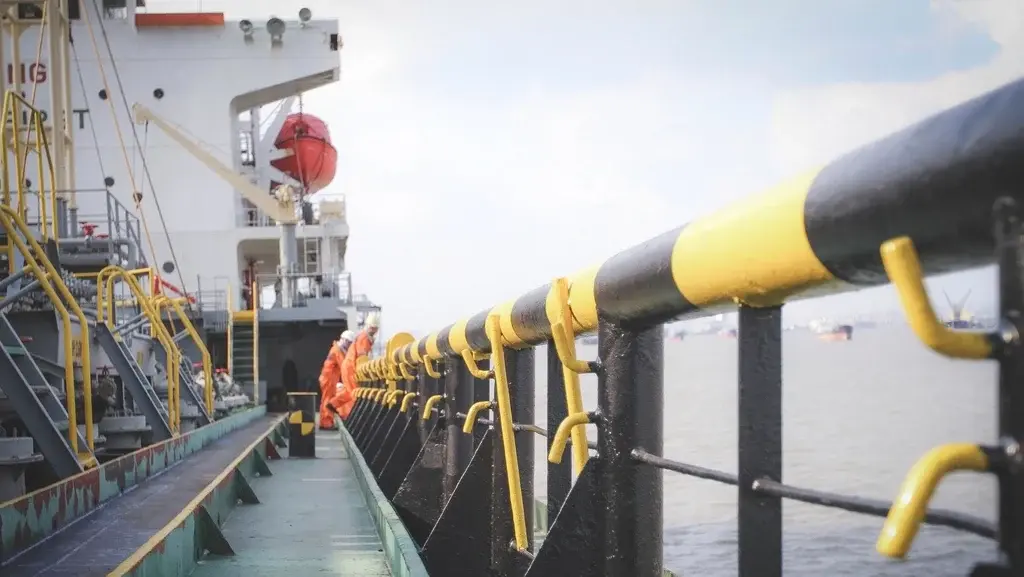
Let’s stop trying to keep up with the Jones Act.
President Trump wisely suspended it last week for 60 days in response to surging fuel prices caused by the war in Iran. “This action will allow vital resources like oil, natural gas, fertilizer, and coal to flow freely to U.S. ports,” said White House press secretary Karoline Leavitt.

I’m grateful for this temporary relief, which will help farmers like me as we move into planting season this spring. In just the last three weeks, my input costs have jumped by 20 percent.
The next step is obvious. The suspension of the Jones Act should continue for more than two months. It should go on forever. Let’s make it permanent. The time has come to repeal this costly and outdated law for the sake of all Americans.
Formally known as the Merchant Marine Act of 1920, the Jones Act requires any vessel that transports goods between U.S. ports to be built in the United States, registered in the United States, and owned and crewed by Americans.
Perhaps that served a worthy purpose when President Woodrow Wilson signed it into law more than a century ago, when radios were a new technology. It may even sound patriotic. But it makes no sense in the 21st century’s world of international shipping and global supply chains. Today it’s a protectionist relic that increases the price everyone pays at gas pumps, grocery stores, and more.
It also leads to absurdity: To get around the Jones Act, gas refined in Texas and Louisiana often travels to the Bahamas before it goes to its true destination of California, according to the New York Post. This detour may add time and miles to the journey, but it’s more efficient than following the dictates of the Jones Act.
Advocates of the Jones Act always insist that the law is necessary for national security. How ironic, then, that President Trump has suspended it during Operation Epic Fury. This appears to be a national-security law that harms national security.
President Trump is by no means the first wartime president to suspend the Jones Act. President Franklin Delano Roosevelt waived it less than a week after Pearl Harbor. He knew that its strict rules on shipping made it harder for the United States to fight and win World War II.
The Jones Act also makes it more difficult for the United States to recover from natural disasters. President George W. Bush suspended it in the aftermath of Hurricane Katrina in 2005 and President Barack Obama waived it in the wake of Superstorm Sandy in 2012.
President Trump followed their example in 2017, when he suspended the Jones Act after Hurricane Maria thrashed Puerto Rico, which of course is a U.S. territory. The late Sen. John McCain made a powerful case for Trump’s action: “It is unacceptable to force the people of Puerto Rico to pay at least twice as much for food, clean drinking water, supplies, and infrastructure due to Jones Act requirements.”
The suspensions of the Jones Act kept on coming. President Joe Biden waived it for fuel shipments on the eastern seaboard after a cyberattack shut down a major pipeline. He did it again in 2022, after Hurricane Fiona battered Puerto Rico.
And now we have a new suspension. It seems that whenever there’s a crisis that involves shipping vital natural resources, presidents suspend the Jones Act.

For years, I’ve been forced to pay for the Jones Act. Because of the way it inflates transportation costs, I spend more for the diesel fuel that powers my tractors, more for the fertilizer I use in my fields, and more for the shipments that deliver my harvest.
More, more, more: This hurts my bottom line. It also causes food inflation for consumers.
Abolishing the Jones Act shouldn’t take a war or a disaster. Times are always tough—and the last thing Americans need is another bad law that makes it harder to make ends meet. Today, it costs four times as much to build a ship in the United States than in South Korea.
We can wipe out these reckless costs to our economy. The legislation to end the Jones Act is ready.
Let’s stop trying to keep up with the Jones Act. Let’s get rid of it for good.
Featured image: “Free oil tanker ship“/ CC0 1.0