A farmer died on the front lines last week.
He was Oleksandr Hordienko, a Ukrainian who grew wheat in the Kherson region. As he drove his car alongside a tractor in a field on September 5, a Russian drone killed him.
“A Ukrainian will remain on his land, dying, but not leaving it. He will die but you will not take him from his land,” said Hordienko to the Wall Street Journal, in a remarkable article published shortly after his death.
My country has been at war for more than three and a half years, ever since Russia attacked in 2022. We’ve held off the aggressors so far, but the fighting grinds on.
I didn’t know Hordienko. He farmed in an area that has seen some of the worst attacks. Russia terrorized him with drones. He told the Journal that he had shot down more than 80 with his rifle.
Then the Russians went after him: “They’re hunting me,” he said in July.
I’ve heard of farmers who use drones for the peaceful purpose of growing food. The Russians use drones as weapons of war against farmers and others.
“Moscow’s army last year started using small, explosive drones to target civilians,” wrote reporters Jane Lytyvnenko and Oksana Grytsenko. “Now, it is targeting grain production.”
They compared these strikes to Joseph Stalin’s Soviet-era efforts to starve and kill millions of Ukrainians in the 1930s, during a manmade famine known as Holodomor.
My own farm is in central Ukraine, more than 200 miles from where Hordienko worked. I haven’t had to deal with anything like he did. Even so, my home can feel like a war zone, at least mentally. We see Russian rockets and drones fly overhead. Ukrainian air defenses try to shoot them down, and they’ve knocked out six or seven drones over our fields. Luckily, the debris did not fall into our villages, and nobody was hurt.
Every now and then, the army takes one of our employees. This makes it harder for us to farm, but I understand the reason: We need soldiers to defend ourselves. One of our guys, an electrician, was recently released as a prisoner of war. He spent more than two years in terrible conditions in Russia. He’s back with his family, and I hope he’ll be able to return to work soon.
When our farm is busy and everything is running well, I sometimes forget that we’re in a war. But it never lasts long. An air-raid alarm will remind me of reality.
There is good news: Our farm is profitable again. Before the war, Ukrainian agriculture boomed. Farmers like me increased production across our country fivefold in about 20 years. Ukraine became a major player in world markets.
The war threatened all of this, of course. My farm struggled to survive, especially during the first two years. They were an economic disaster.
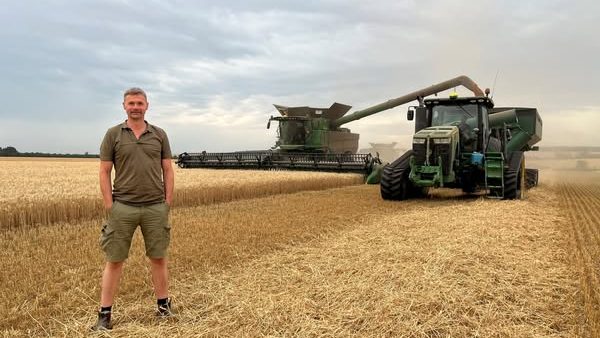
Now we’re back in business. In August, we harvested canola, wheat, and barley. The yields were good. We’re also growing sugar beets, sunflowers, corn, and soybeans. We’ve had a dry year and expectations for the spring are a bit below normal, but the crops look okay given the circumstances.
We’re also able to export what we grow. Thanks to the Armed Forces of Ukraine (AFU), the Black Sea ports are open. We’re getting good prices and contributing to global food security. The Russian fleet is mostly destroyed and the ships that remain stay away, but drone attacks remain a constant threat.
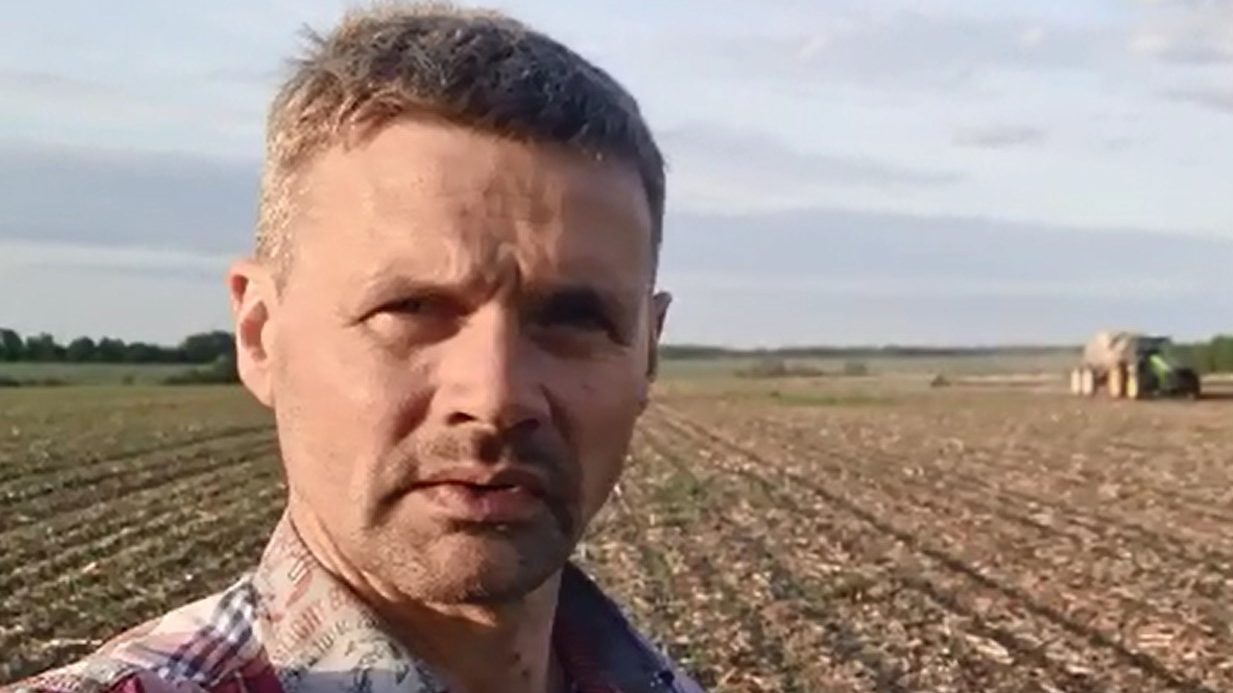
Before the war, I worried a lot about the weather, in the way of farmers everywhere. I’ve now come to accept that I can’t control what it does. I know that a single rocket or drone can end everything, as it did for my fellow farmer Hordienko.
When I wake up, the first thing I do is check the weather report because I still must adapt to its conditions. The second thing I do is look at the news to see if Russian president Vladimir Putin has died. I fear that this must happen before the war can end.
And then I just keep farming. That’s what I can control.
Like all Ukrainians, I mourn the death of Hordienko—and all the losses we’ve suffered in this cruel war.
I’ll also remember some of Hordienko’s last words: “We will fight for this land. For us, this land is everything.”
In this video, Kees Huizinga, who authored this piece, shows firsthand the challenges farmers face as they work their land during war.