First the sun turned red. Then it vanished in the smoke from the fires on the coast.
I was driving in rural California, heading toward my farm in the Central Valley—and from almost a hundred miles away, I watched the devastation near Los Angeles.
You’ve seen the awful pictures of the infernos at Pacific Palisades, Altadena, and elsewhere. Maybe you’ve heard the latest horrible stats: more than 50,000 acres burned to the ground, thousands of homes and businesses destroyed, and some two-dozen people dead.
This is one of the worst disasters in U.S. history. My heart goes out to everybody who has suffered and lost.
At the same time, I can’t stop thinking that it didn’t have to be this bad.
California has mismanaged its water for decades—and our state didn’t appear to have enough of it ready when people needed it most. A 117-million gallon reservoir in the area of the conflagration was empty, due to repairs that were supposed to begin nearly a year ago. The governor has called for an investigation.
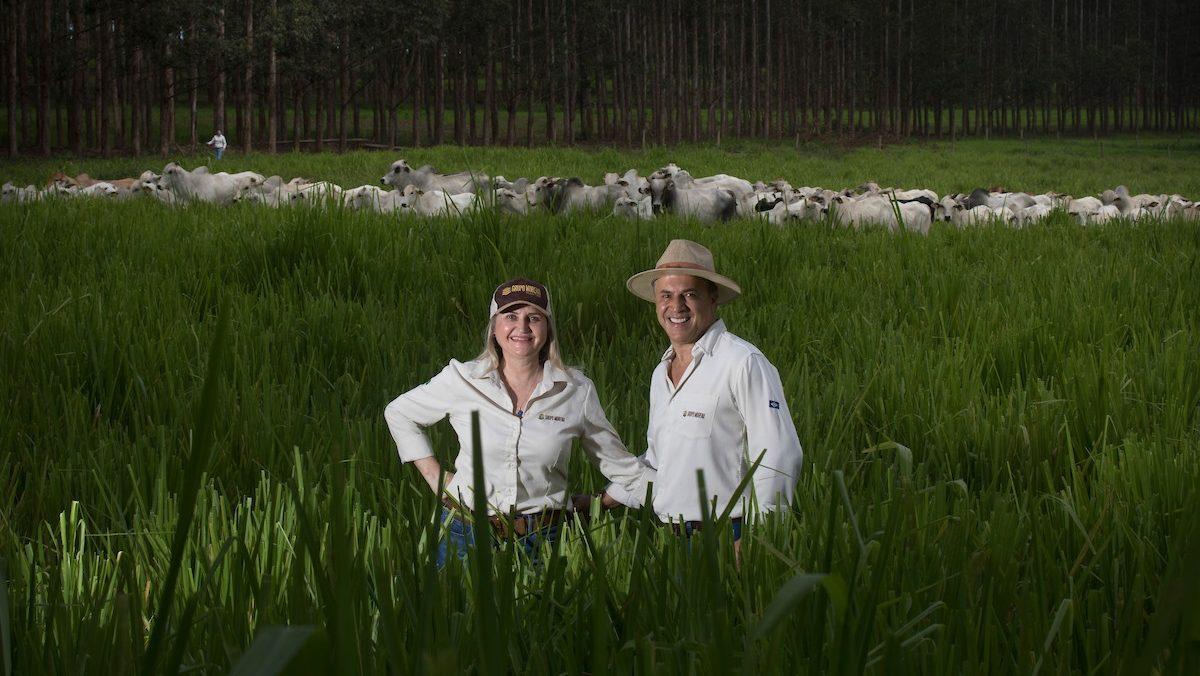
Our water problem is wide and deep—and I’ve seen it up close as a farmer.
Let’s begin by recognizing that not every disaster is avoidable, and water management is complicated.
Let’s also recognize that in California, we can do a lot better—and there was a time when we did.
Back in 1977, when I was getting started as a farmer, California endured its driest year on record. It simply never rained. This makes it hard to grow crops.
Yet I still received an allotment of water from the state’s system of reservoirs and irrigation. I got 25 percent of what I would have used in a normal year—not much, but also a lifesaver in a hard time.
If the same thing were to happen today—a year without rain—I’d probably be out of luck.
That’s because the environmentalists have entered the picture, with their litigation and lobbyists. They’ve diverted an enormous amount of California’s water away from human needs, which includes everything from drinks and showers in cities to nourishing crops on farms.
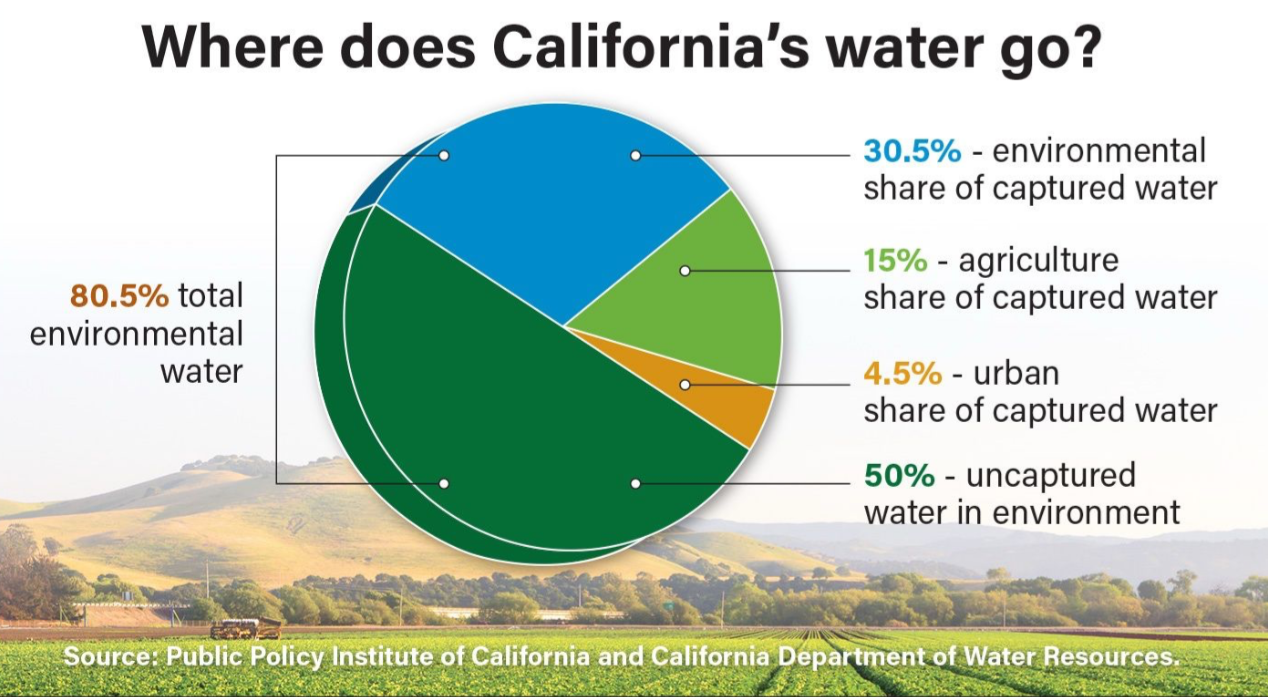
More than 80 percent of California’s water is marked for “environmental” uses, according to the Public Policy Institute of California. This means it flows through rivers and streams and much of it flushes into the ocean. When anyone suggests tapping into this resource, the environmentalists scream their objections, citing the importance of the delta smelt, a minnow-like fish that swims in our waterways and is currently an endangered species.
Just 15 percent of California’s water is invested in agriculture—a modest amount, considering what it delivers in terms of food security as well as economics. Farmers and consumers depend on this resource. So do factory workers who build tractors and grocery-store employees who stock fruits and vegetables.
We constantly hear earnest warnings about so-called “misinformation.” To be fair, social media has stoked some crazy conspiracy theories about California’s fires. News flash: It turns out you can’t believe everything you read on the internet.
Yet the media commonly reports a harmful bit of misinformation, peddled by activists: The claim that farmers soak up the vast majority of California’s water. For years, I’ve battled this falsehood—but it persists, especially when people who don’t know much about California’s water talk about California’s water.
Here’s the reality. I don’t get nearly as much water as I’d like. This year, I expect about 30 percent of my farm to lay fallow, meaning that I won’t even attempt to grow anything on it because I can’t get enough water. Some years, I’m forced to let 60 percent lay fallow.
These aren’t bad years. These are typical years. California has an excellent climate for growing food, but we forfeit its potential because we neglect our water. One way to fight food inflation, which has hurt a lot of working families lately, is to grow more food.
That means we need more water.
And we ought to have it: Across the years, voters have passed bond measures to expand water storage and transportation. Yet we’ve built almost nothing, thanks to environmentalists who wage war on every attempt to improve the management of our natural resources.
Our political class has ignored this crisis for too long.
We need fresh eyes on this problem—and perhaps the calamity of the recent fires will drive us toward solutions that finally will put people first.