When he was on his deathbed in 2009, Norman Borlaug delivered his final words of wisdom: “Take it to the farmer.”
We’re all about helping farmers at the Global Farmer Network—but now, as we recognize 25 years of advocacy and plan for the next 25, it occurs to me that our organization seeks to turn Borlaug’s admonition upside down.
We’re taking the farmers to you.
We strongly support the vision of Borlaug. The father of the Green Revolution meant that scientific and technological advances in agriculture ultimately must make their way to the men and women who produce food. This remains an urgent mission.
Our job at the GFN is to amplify the voice of farmers as we promote technology, trade, sustainable farming, economic growth, and food security.
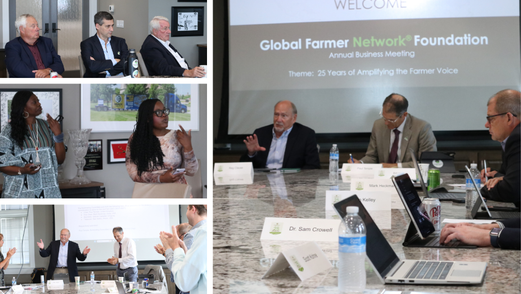
As I looked around the room during our board meeting in Des Moines this summer, I realized how far we’ve come. I saw familiar faces, including a couple of GFN’s co-founders, both fellow Iowans. I also saw long-time colleagues who have helped the organization along the way.
Most important, though, I saw farmers from around the world who are forging the future of food systems. They came from as far away as Zimbabwe. Others hailed from Mexico, Nigeria, and Uruguay.
Across a quarter century, we’ve discovered that farmers share a lot of common challenges. But we also possess a mutual strength: the authority and authenticity of our voices.
Far too often, the voices of farmers go missing in debates over public policy. Politicians, bureaucrats, and activists determine what farmers grow, how we grow it, and where we can sell it. Oftentimes, they don’t bother to consider what’s in the best interests of farmers. Sometimes they don’t know. Occasionally they don’t even care.
In the aftermath of the riots at world trade talks in 1999, we wanted to express our support, as farmers, for free trade. That’s because even farmers in landlocked Iowa rely on global customers, and we didn’t want professional protesters to dominate the discussion with their violence, ignorance, and isolationism.
Lost in the noise and confusion was a simple fact that most farmers understand: The ability to move food and goods across borders benefits both farmers and consumers.
We also knew that the messenger is as important as the message—and that farmers have something valuable to add to any conversation that involves food.
Over the years we have continued our mission, building an institution with global interests and global leadership. Nearly 300 farmer-leaders from 69 countries and on 6 continents have been invited to complete our training and add their voices to improve the position of farmers everywhere. They’re involved in the domestic debates of their home nations as well as in worldwide forums.
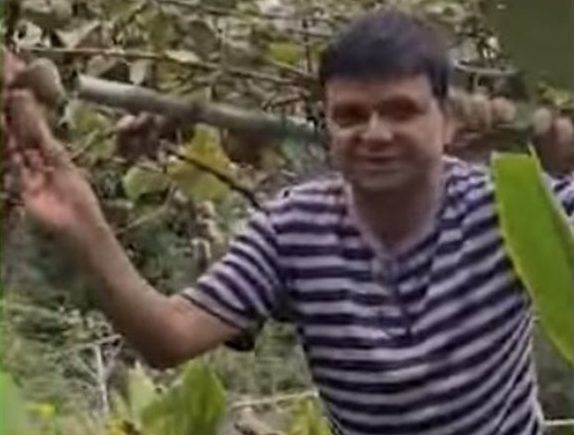
Years ago, it never would have occurred to me as an Iowa farmer who raises cattle, corn and soybeans that I would get to know a person like Bhola Nath Khatiwada of Nepal. He grows kiwis, manages buffalo, and maintains a fishpond.
Yet we have mutual interests. They start with weather and markets, which are two things that every farmer cares about. They also include a passion for making sure farmers play a role in the politics and policy of agriculture.
GFN amplifies the voices like Bhola’s—and so many others.
We love what we do, and we’d prefer to focus our time and energy on our vocation of food production. Yet we also know that we need a voice in the corridors of power—and when it comes to farming, nobody’s voice holds more power than the voice of the farmer.
As one of my GFN colleagues recently noted, you’re either at the table or on the menu. The job of the GFN is to put farmers at the table and in the conversation, as policymakers discuss food regulations, trade and tariffs, climate change, and anything else that affects agriculture.
Traditionally we’ve done it through the legacy media, and we’ll continue to do it there. Yet much of our focus is now on the new media of social networks and web-based publications, plus our riotous WhatsApp group that allows instant communication and knowledge transfer in a global dialogue.
We in fact have become a megaphone that gives farmers a chance to join every conversation that affects them, no matter where it happens.
I’ve known for a long time we’re making a difference.
I watched it during a video conference, when a German farmer who was born behind the Iron Curtain talked about the confidence she’d gained through GFN activities and leadership training.
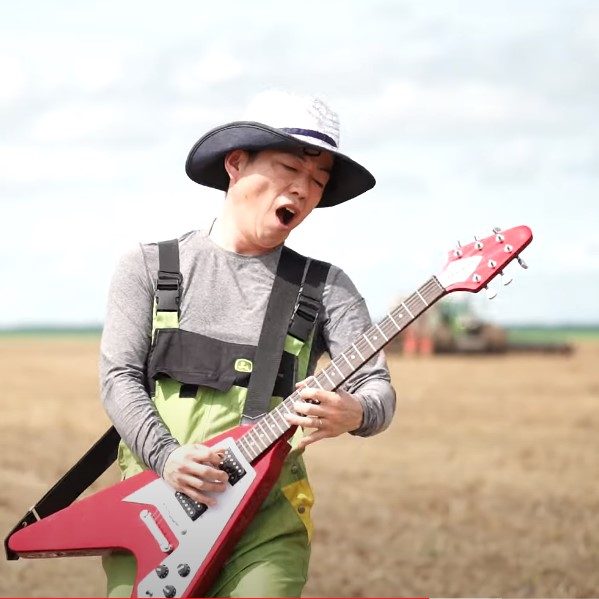
And I saw it again at the 2024 World Food Prize, when Japanese GFN member Shuichi Tokumoto performed his rock song about no-till farming—and earned a standing ovation from a big crowd that included everyone from top scientists to heads of state.
The GFN has harnessed the power of networked leaders. Our sector is agriculture. Our scope is the world. We are responsible and focused on forging the future of food systems.