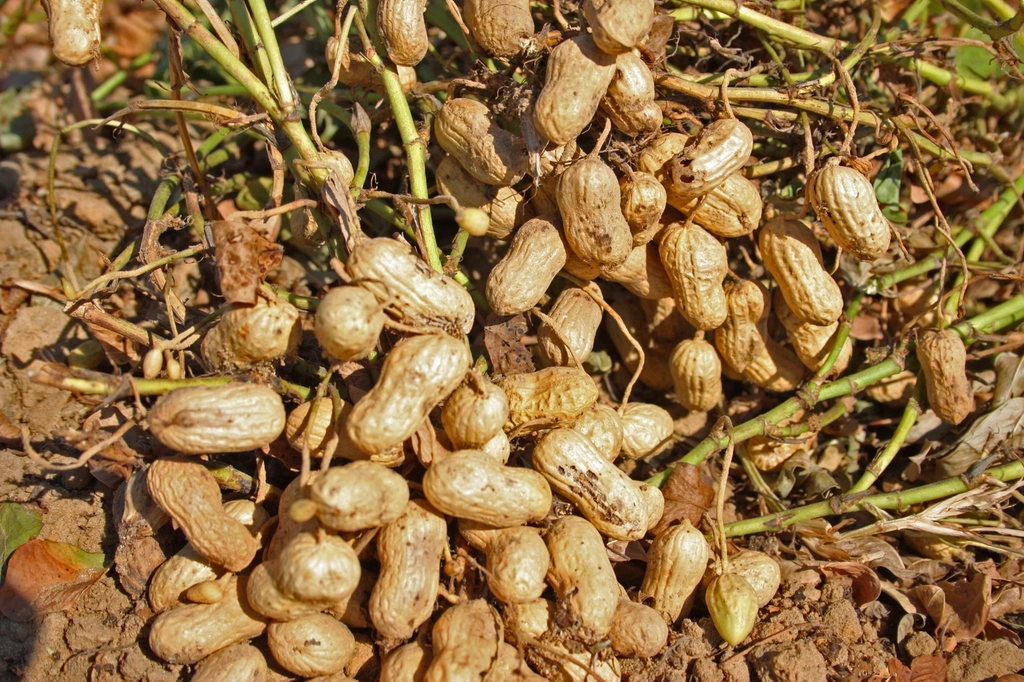
One of my goals as a Mexican farmer is to supply the peanuts for your M&Ms.
We have been working towards this goal as part of our family farm’s business strategic growth plan here in Chihuahua, where we grow the peanuts that are the essential ingredient in one of the world’s favorite candies.
As we overcome water shortages and improve our access to technology, I believe that we can nurture an agricultural renaissance in which challenges become opportunities. When supported by science and collaboration, Mexican fields like mine can outperform the world.
My grandfather started our farm, and he introduced peanuts to the operation half a century ago. Back then, they were a rotational winter crop alongside wheat and enabled by abundant water. Today, with water scarce, peanuts are a part of a rotation strategy with alfalfa and corn.
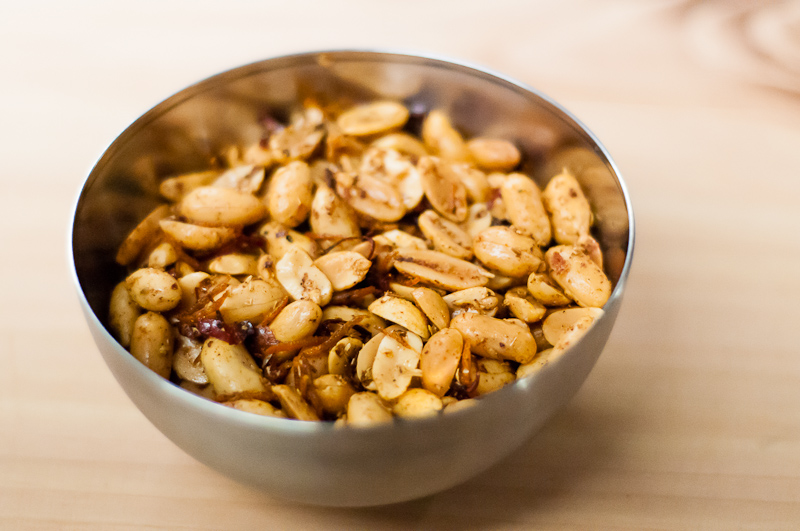
We seek to grow high-quality peanuts in large quantities. After harvest, our raw peanuts undergo a rigorous selection and eventually join the value chain in products such as sauces and small-batch peanut butter as well as packages of shelled peanuts with assorted flavors, roasted peanuts in shells, and premium natural roasted peanuts.
Our strategic plans include meeting the export compliance requirements that will allow us to provide peanuts to Mars, the company that makes M&Ms. It already buys more than 300 million pounds of peanuts each year, mostly for Snickers candy bars. That’s about the weight of 25,000 full-grown elephants.
This huge demand has put Mars in “a race against a fast-changing climate that has brought waves of disease and pests that threaten the world’s peanut supply,” reported the New York Times in July.
My farm is on the front lines—and we’re in a living laboratory where research institutions, technological pioneers, and international partners can test solutions, from irrigation driven by artificial intelligence to drought-resistant genetics.

Right now, for instance, we’re seeking to improve peanut nutrition with an experiment in specialized micronutrients that deliver potassium, which fuels late-stage maturation and results in heavier kernels.
Our most urgent task, however, is to provide our crops with the water they need. Northern Mexico is dry, and climate change is making it drier. We receive some rainfall, but we mostly rely on water allocated to us by the government. It’s often not enough and droughts can devastate.
Precision irrigation technologies are a part of the solution. We also plant with GPS-guided equipment that achieve optimal crop density in our fields, improving seed germination, reducing input costs, and boosting yields. All of this helps conserve water and lets us grow more with less.
These investments are substantial but also necessary. Together, they can make sure our crops get the water they need and that nothing goes to waste.
Soil quality is a constant challenge. A lot of farms in our region have suffered from erosion and compaction plus an overreliance on chemical fertilizers. This has taken a toll. On our farm, we’re starting to fight it with cover crops on fields previously harvested for peanuts.
Ultimately, though, we need better genetics—in other words, peanuts bred to thrive in our region’s climate and soil. My perspective is shaped by my own background in biotechnology. My first-hand experience in synthetic genetics is a driving force behind my conviction that embracing cutting edge genetic technology is not a choice, but a necessity for propelling Mexican agriculture forward.
The peanut seeds we currently use are better adapted to other profiles. We do our best with them, but they often suffer from water stress that depresses yield. Many barely meet our minimum profit thresholds.
Ideally, we’d grow peanuts that can endure dry periods, resist herbicides so that we can control weeds, and increase biomass so we can use the plants for both peanut production and animal forage.
We’ve found that specialized products can make a difference. Our family once collaborated with a Mexican researcher who enhanced peanuts through hybridization, and he created a variety that tripled yields. Unfortunately, the company backing his work declared bankruptcy before commercialization.
This shows the amazing potential of Mexican peanuts—but only if government regulators and others are open to technology in all its forms, including genetic modification and editing.
Success will take a deliberate effort. As a peanut scientist told the New York Times: “We are not going to stumble on the perfect peanut. One that resists drought and disease is not going to be discovered by accident. It has to be grown.”
By combining generational wisdom, disruptive thinking, and a determination to achieve, we can make Mexican agriculture both innovative and aspirational—and turn farming into a career that attracts our best and brightest.