The conference was to focus on farming, innovative technologies and food production—but only a few farmers attended.
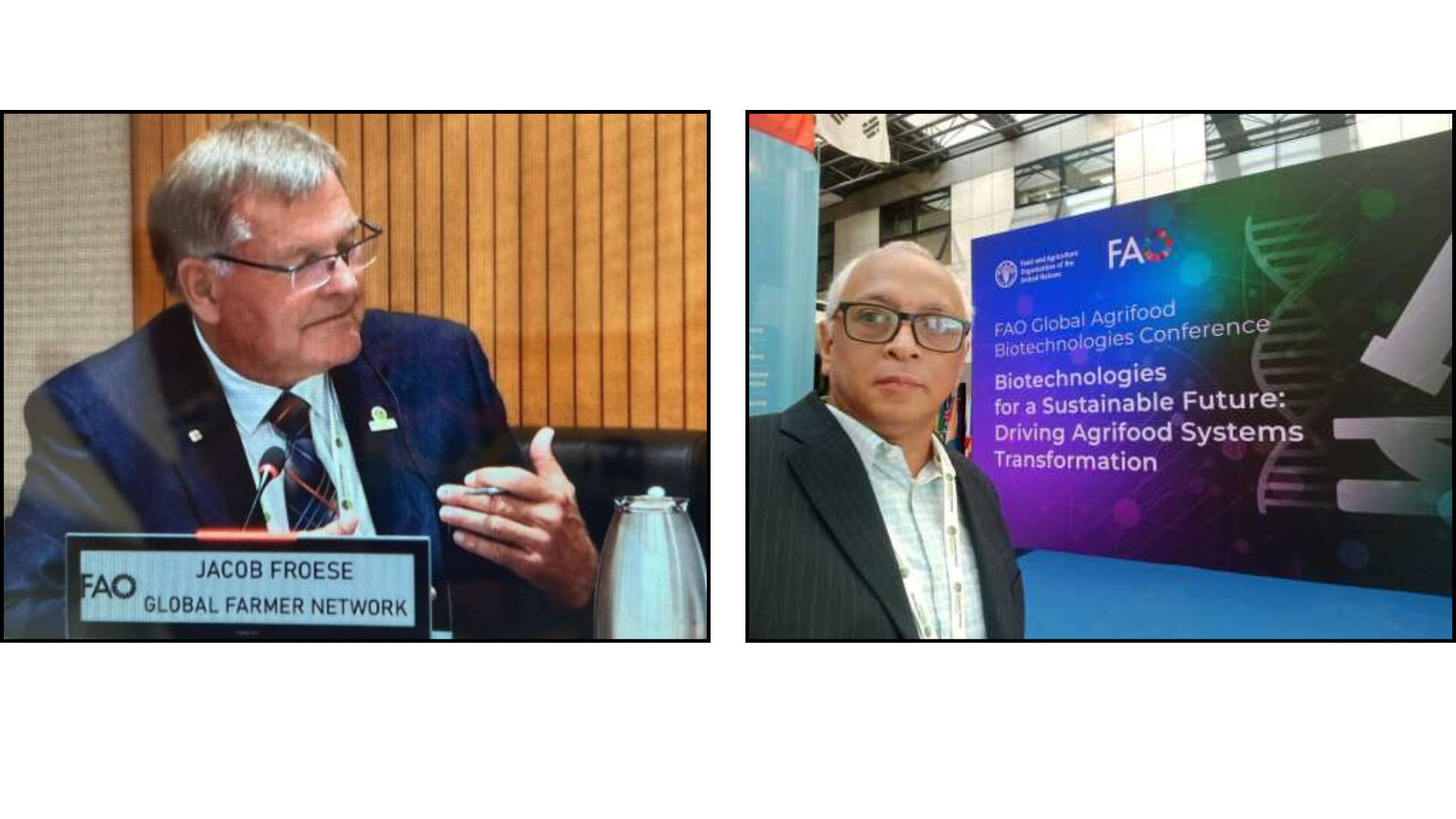
We were two of them, from opposite sides of the planet. One of us is from the Camotes Islands in the Philippines. The other is from southern Manitoba, in Canada.
Getting away from our farms isn’t easy. There’s always work to do, especially this time of year. Anytime you take a week off from the farm during growing or production season, someone else has to carry the load and there can be consequences, especially on the operational side of the farm. And traveling to Rome is an expedition. It’s a big investment in time, energy, and money.
Yet we both felt it was important to show up for the conference sponsored in June by the Food and Agriculture Organization of the United Nations (FAO). It was called “Biotechnologies for a Sustainable Future: Driving Agrifood Systems Transformation.” This was the very first Global Agrifood Biotechnologies Conference convened by the UN and hosted at the FAO headquarters in Rome.
We were welcomed by the organizers, who seemed sincerely interested in hearing the voices of farmers.
That’s important, because farmers are often not included in forums such as this. Usually, we just aren’t invited in the first place. If we are invited, we can have trouble making it due to the daily demands of our farms.
The sad result is that farmers rarely have a place at the table. Others participate, including officeholders who set agendas, regulators who make rules, and activists who push their plans.
As they talk about agriculture, they don’t hear from the farmers who practice food production. It’s like having a conference on astronomy without anyone who studies the stars.
Farmers are a part of the solution to any question that involves agriculture and the global agrifood system. We are early adopters of agricultural innovation in biotechnology in our individual areas of the world. Early adopters drive change, and the mainstream follows when they see the results and experience the advantages whatever they may be, economically, socially and environmentally. Farmers bring much-needed knowledge, expertise, and realities from the ground to these conversations.
When farmers are missing, it hurts everyone and it hurts farmers most of all. What happens in these venues can shape our lives and work, and not always for the better.
So it was good not only to be at the FAO’s headquarters in Rome, but to be on the agenda and in front of an audience at a major conference. Both of us spoke and delivered messages about the importance of biotechnology in agriculture.
There are a lot of differences between us. We come from different countries. We grow crops in different ways. We do it in different climates. We have different goals and expectations. We also said different things, at least in the particulars.
Yet our major themes were the same. We’re farmers who want to innovate. We want to use technology for the improvement of our farms, our food, and our countries’ food security.
And that means we need biotechnology.
The science of biotechnology is brilliant. We’re beating bugs like the fall armyworm (in the Philippines) and defeating weeds like the giant ragweed (in Canada). We’re also withstanding weather, from hailstorms to hurricanes. We’re plowing the soil less and conserving it more.
Because biotechnology gives traits to our crops that make them healthier and hardier, we’re growing more food with less waste and reduced loss to disease, pests, and extreme weather.
We need a wide lens on agriculture while remaining grounded. We need society and farmers to recognize that we are producing food, more than just crops. We need to further develop models that can be adapted with specific, scalable strategies for smallholders who are focused on feeding their family as well as large operators who aspire to feed the world. There’s no such thing as “one size fits all,” but biotechnology has the potential to find the right size for just about anyone.
By unlocking the power of biotechnology, we’re unleashing the future.
Unfortunately, we’re still fighting prejudices against biotechnology due to ideology, ignorance, and fear. These forces block farmers from access to innovation in key crops, especially in the developing world. They also limit trade opportunities, as some nations put restrictions on countries whose farmers use biotechnology.
We must do better.
The first step is for farmers to be heard. Scientists must learn about our experiences in our fields and what we want for our farms. Regulators must understand the practical difficulties of farming and how they can work with us in partnership rather than against us in animosity. And influential groups such as the FAO must hear from us directly as we explain who we are, what we do, and what we need.
That’s our story—and we appreciate every chance we get to share it.