I’m a farmer without a farm.
That sounds like paradox—a cook without a kitchen, a pilot without a plane, or a teacher without a classroom.
Yet I’ve learned to flourish in the world of agriculture as a consultant from South America who strives to deliver knowledge and transfer technologies to farmers in Africa. My work has taught me about the great things that can happen when we share information and tools across borders and oceans.
A decade ago, I was a farmer with a farm—or, more accurately, a farmer with many farms. I oversaw the production of a wide range of crops and livestock for farm owners in Argentina, which of course is an agricultural powerhouse. This was my occupation for about 15 years.
Then I had a chance to try something different.
So I became a consultant who advised farmers. I started in Sierra Leone and expanded to the neighboring nations of Ghana, Guinea, Ivory Coast, and Liberia as well as to Kenya, in east Africa. I’m active with staple crops such as corn, rice, beans, and soybeans. We also try to work with sorghum and millet.
My job is to help farmers in Africa grow more food. My strategy is to promote the know-how and transfer the technologies of Argentina to the farmers in these countries.
Half a century ago, Argentina and a lot of Latin America were in a position much like Africa’s today. Our region showed agricultural promise, but it underperformed. Since then, the innovations like no-till and other technologies that take care of the soil have turned my native land into a breadbasket. Farmers in Argentina, Brazil, Uruguay, and elsewhere can compete with farmers anywhere.
Now Africa needs its own upheaval and transformation.
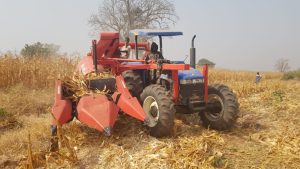
Many of the developments that fueled gains in Latin America also have helped Africa. Yet Africa remains far behind the rest of the world in food production. Its farmers struggle to feed a continent with a population of more than 1 billion.
They have an excellent opportunity to improve. Africa has fertile farmland, a favorable climate, and a ready workforce. They just can’t do it on their own. Even the best farmers rely on education and collaboration—and we must extend our networks into Africa, for the sake of the people who live there as well as for our interconnected world.
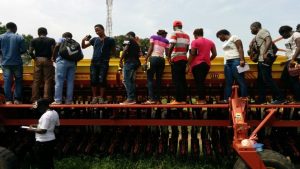
Food security is not an African problem, but a global problem—and making African agriculture better will help people everywhere. It will make our food supply more resilient.
My approach starts with
no-till, which replaces traditional plowing as a form of weed control. It calls for the use of cover crops, crop-protection products, and little or no disturbance of the dirt in the fields. No-till improves soil health by helping the ground to retain moisture, increase biodiversity, and defend against erosion—and at the same time, it allows farmers to fight the weeds that steal nutrients from crops.
Farmers in Argentina pioneered no-till—and its proper use requires instruction. The difference between doing it right and doing it wrong is the difference between a huge harvest and a disaster. The learning in fact must go both ways. We can’t just “copy and paste” the experience of South America onto Africa. People like me must work in partnership with the farmers who know their own lands, climate, and crops.
Africa faces plenty of challenges, but this is exactly why it makes it so ripe for smart investments. If we join forces, Africans can enjoy more access to the modern machinery and enhanced seeds that have made such a big difference elsewhere.
I may be a farmer without a farm, but I’m also an investor who is always looking for an opportunity—and sharing information and technology with African farmers will generate a big bounty.