“There is still a judge in Berlin!”
This inspirational line suggests that even when a situation seems hopeless, it’s possible to find a pathway that will deliver justice.
That quote is included in the book “The Kingdom of Frederick of Prussia”, written by Emilio Broglio, an Italian politician who served as a Minister of Agriculture and Industry. Broglio tells the story of the miller Arnold of Sans-Souci and his fight to obtain justice against the abuses of a nobleman, appealing to Frederick the Great, the Supreme Judge in Berlin, who agreed with the miller.
These words capture my joy at the prospect of prevailing in a long legal battle on behalf of farmers and GM technology in Italy.
It has taken me nearly a decade, but I’ve finally found a judge who shares my doubts about government dictates that seek to prevent farmers like me from planting a safe and healthy crop.
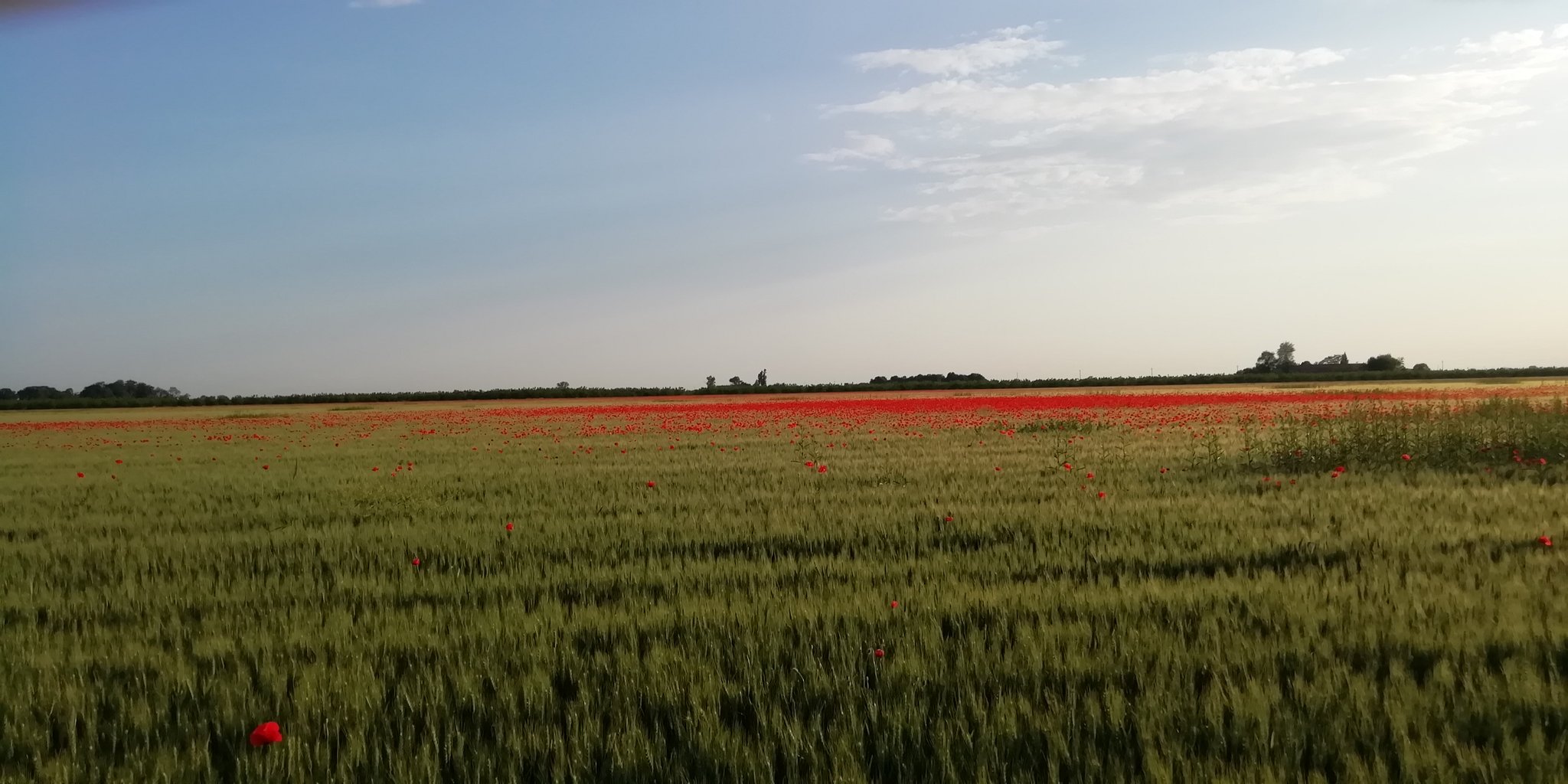
I’m an Italian farmer who owns five hectares of land, which is around the same size as three and a half ordinary soccer fields. I plant corn and sell it as silage to a beef bull breeder. The income I get from the land is not enough to supply a full income. My main job is as an agronomist, working with farmers to help them improve their production and sustainability.
That’s what drew me years ago to the innovation of GM crops. I saw biotechnology as an extraordinary tool that good and talented men have discovered for the good of humanity. I believed this technology would allow farmers to grow more food on less land.
When GMOs started to become available about a quarter of a century ago, European regulators began to approve them for use. They authorized a basic variety of corn that contains a natural ability to fight the corn borer, an insect whose infestations can devastate entire fields.
This represented a massive advance in agriculture, allowing food to become more abundant and affordable for consumers. At the same time, it made farming more profitable for growers by decreasing crop loss through protection from pests. It even helped the environment because farmers needed fewer pesticides to defeat corn borers and other pests.
Much of the world embraced sound science and technological progress. GMOs are now a conventional tool of farming around the world, from North and South America to India and Kenya and beyond.
Then arrogant and ignorant forces blocked this amazing development in Europe. Activist groups lobbied politician, spread fear among the public, and worked against the interests of humanity. And many Italian judges consciously gave voice to these irrational fears.
I started with determination to test the legitimacy of the of the Italian laws and decrees to ban a crop that European regulators have explicitly approved for cultivation and commercial use.
Italy, like many other European countries, took the dramatic step of banning the GMO corn that had received EU approval. At that time, the decision relied on a directive of the European Union that supposedly authorizes member states to outlaw GMOs that its own regulators have approved for use. It had nothing to do with science and everything to do with appeasing political radicals and politicians who do not have the courage to defend the demands of science. (It must be said that 5 European states have not joined the effort to ban and their farmers can freely cultivate authorized GMO corn.)
Four times, from 2010 to 2015, I planted GMO corn and prepared to defend my freedom to farm—and now I’ve battled for five years in the Italian courts. During this grueling ordeal, I’ve enjoyed victories and suffered setbacks. Members of Greenpeace and other fringe groups even attacked my farm, invading my fields and destroying my crops, in an act of extralegal violence.
A big blow came last year, when I received a fine of €50,000 for planting GMO corn on a small field in 2018. I challenged this punishment in the Udine court—and received support from the judge who believes I have a reasonable claim. She recently referred my case to the European Court of Justice. Incredibly, 5 days later I received a decision from the Court of Rome, agreeing that my doubts about the compliance of the cultivation ban were reasonable and, like the Judge of Udine, referred my question to the European Court of Justice.

Now I hope to find a fair-minded judge not in a metaphorical Berlin, but in the real Luxembourg, which is the home of the Court of Justice.
This could become not only a win for me and my farm, but an enormous victory for farmers in Italy and throughout Europe. It holds the potential to give us the right and the freedom to choose to plant a kind of corn that everyone knows is safe and healthy as well as good for the environment and the economics of farming.
If my case succeeds, we’ll keep pushing because a single kind of GMO corn isn’t enough. There are now many types of GMO crops that can benefit farmers and consumers alike.
The voice of the farmers has been missing or not heard. If my case is successful, I believe there will be a turning point. Europe’s ideological politicians will no longer have the opportunity to invent another rule that blocks the free circulation and cultivation of this staple commodity.
It’s up to us to speak up and stand up for the freedom to choose.