You’re either at the table or on the menu.
That’s one of the most important lessons I’ve learned as a farmer with nearly 30 years of public service in the state legislature of North Dakota.
Here in the United States, we’ve just gone through big national elections. They were a milestone of sorts for me, as I’m now moving into the final phase of my career: At this stage in my political career, I’m headed for political retirement, probably sooner than later.
I’m a farmer first. That means my top commitment is to my family farm, where we grow corn, soybeans, wheat, pinto beans, and more.
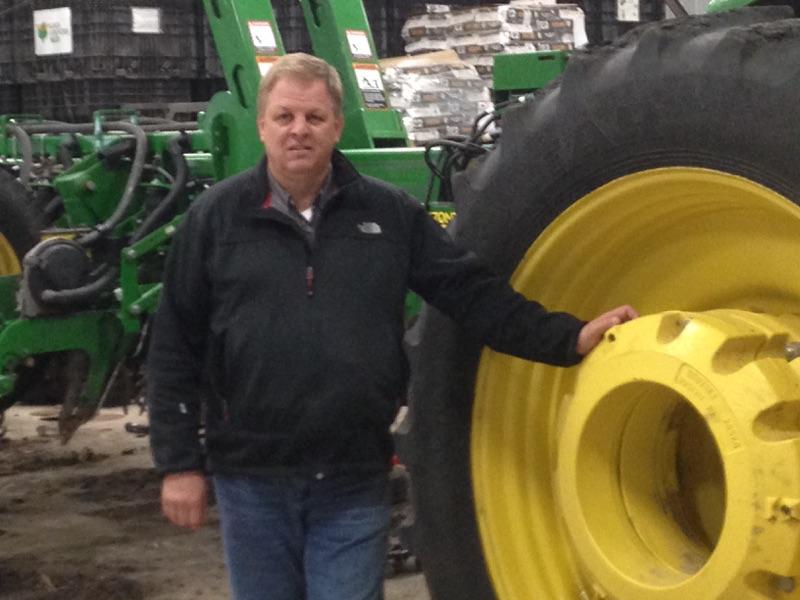
I’m a farmer who engages in politics, not a politician who dabbles in farming.
Many farmers say they have no time for politics. As a wise man once said, however, you may not have time for politics—but politics has time for you.
Farmers who make the time to sit at the ‘political table’ can cooperate with politicians for the benefit of agriculture.
Too often, however, we’re absent. That’s when it becomes possible for the politicians to put us on the menu. If they restrict our ability to sell what we grow or limit our access to technology, they threaten our well-being and that of our communities. And even the food security that matters for everyone could be at risk.
Stopping decisions that hurt requires more than complaints. Success demands the political engagement of farmers.
I like a quote from Theodore Roosevelt, the 20th-century president who once ranched in my state: “It is not the critic who counts; not the man who points out how the strong man stumbles, or where the doer of deeds could have done them better. The credit belongs to the man who is actually in the arena, whose face is marred by dust and sweat and blood.”
These critics of good agriculture policy are often people who are far removed from the land and those of us who grow healthy and affordable food for a hungry world.
If we want to make a difference, farmers must enter the arena of politics. It can start with something as simple as voting.
For me, it ultimately led to running for office. I wanted to represent the interests of my farm as well as the interests of other farmers in my district and state.
I’ve suffered through tough moments. I once lost an election to an opponent who campaigned against my support of GM technology for crops. This was back in the early days of genetic modification, when we knew these crops were safe but consumers were uncertain and vulnerable to manipulation.
Instead of quitting, I kept working. I stayed in the arena, discussed what I knew as a farmer, and won my next election.
The experience taught me that we can make progress with skeptics. Sometimes we can even turn those who appear to be foes into friends, as we discuss everything from economic and environmental sustainability to the need for access to technology.
One of the wonders of modern agriculture is that with today’s tools, I can harvest in a single day what it took my grandfather a month to accomplish. This has led to a paradox: As farmers get better at growing food, we need fewer farmers to produce it—and that means fewer people understand what we do.
Overcoming their ignorance may be our greatest challenge.
Agriculture is still North Dakota’s leading industry, but farmers make up a dwindling part of the 47 senators and 94 representatives in our state legislature. Many grew up on farms, but my guess is that only about 10-15 of us are active farmers, and we tend to be in the higher age category. Many of the younger legislators do not have an immediate connection to the farm.
We’re essential to the discussions and debates over tax policies, budget choices, and regulatory decisions because we can provide information from the field, literally, that supports what is needed to move these discussions in a farmer-friendly direction.
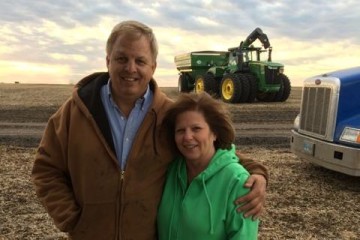
I should note that this is a team effort. I couldn’t serve without strong support on our family farm.
Over the years, as I’ve politicked, I’ve depended on my wife, father, brother, and son to keep the farm going. They may not be politicians, but they’ve made it possible for me to be one. That’s their form of political engagement.
They’re back home, sitting around the table—and I’m working to make sure that none of us winds up on the menu.