When Dr. Mariangela Hungria visited my farm in Brazil, she gave a brilliant lecture on the use of microbiology to retain nitrogen in the soil for soybeans, corn, and other grass crops. As a work colleague, we got to know each other better throughout the day, I became increasingly impressed by this amazing scientist.
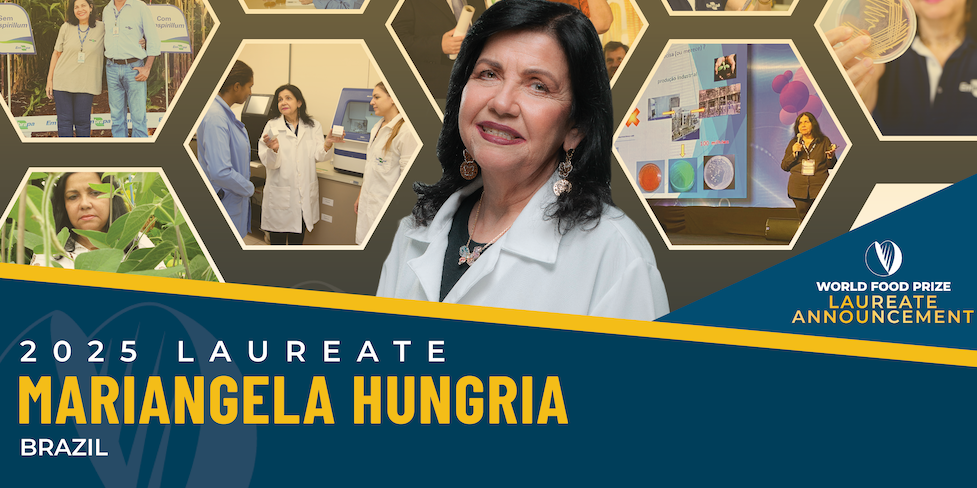
Even so, I had no idea that one day she would win the World Food Prize, whose international reputation makes it the equivalent of winning a Nobel Prize in food security.
This is an outstanding recognition for a remarkable individual, as well as an important moment for Brazil and its agricultural community.
Dr. Hungria will formally accept her award in Des Moines this October, when the World Food Prize hosts its annual gathering of global officials, business leaders, and farmers.
Her major accomplishment is to push the Green Revolution forward into the 21st century, focusing on soil science to improve agricultural production and sustainability in an era of climate change and resource pressure.
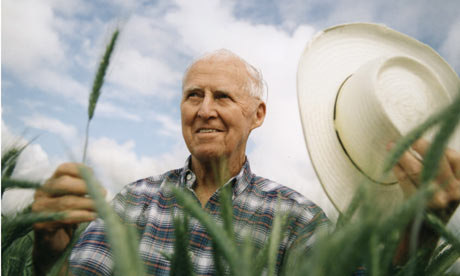
The Green Revolution of course transformed food production around the world, making it possible for farmers to feed a planet of billions of people. Led by Norman Borlaug, it focused on seed technologies, crop-protection products, irrigation, and more.
A great innovation of the Green Revolution was the widespread adoption of nitrogen-based fertilizer, which encourages the growth of crops and produces higher yields. It was one of the major blessings of agricultural science in the 20th century.
Yet its overuse can create challenges, including nutrient imbalances in the soil.
When Dr. Hungria went to college in the late 1970s, she began to look at new strategies, such as using bacteria to supply nitrogen to crops. Not only did she believe that this held environmental promise, but she also thought it might improve the economic sustainability of farmers who otherwise had to buy fertilizer for their fields.
While farmers still use synthetic fertilizer today, Dr. Hungria’s innovations have made tremendous contributions to farmers in Brazil and in other tropical regions. In 2025, for example, they are projected to save Brazilian farmers about $25 billion in costs and to reduce greenhouse-gas emissions by about 230 million metric tons of CO2. At the same time, her work has made us more productive: We’re growing more food than ever before, while using less resources.
I probably should add that among her accomplishments is motherhood. She has two daughters, including one with special needs, and she has successfully balanced her work as a biologist with her obligations to her family.
Perhaps this human dimension has given her a special insight into Dr. Borlaug’s famous admonition: “Take it to the farmer.” Dr. Hungria always wanted to make the connection between the white-coated experiments of labs and the dirt-stained work of farmers who feed the world. That’s why she came to my farm, and why she has visited so many other farms in Brazil and beyond.
She and I are both affiliated as researchers with Embrapa, a Brazilian agricultural research company, and so I’ve been both aware of her work for a long time and attuned to new technologies that can help me as a food producer in a rural area.
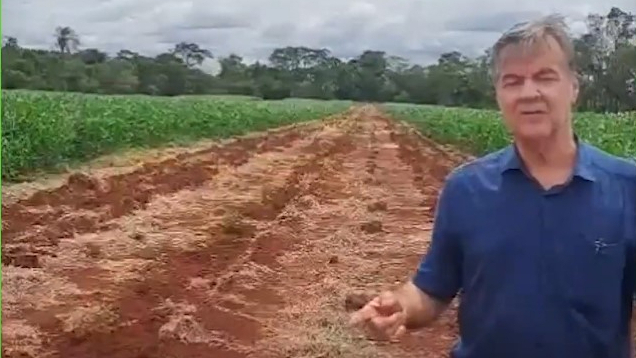
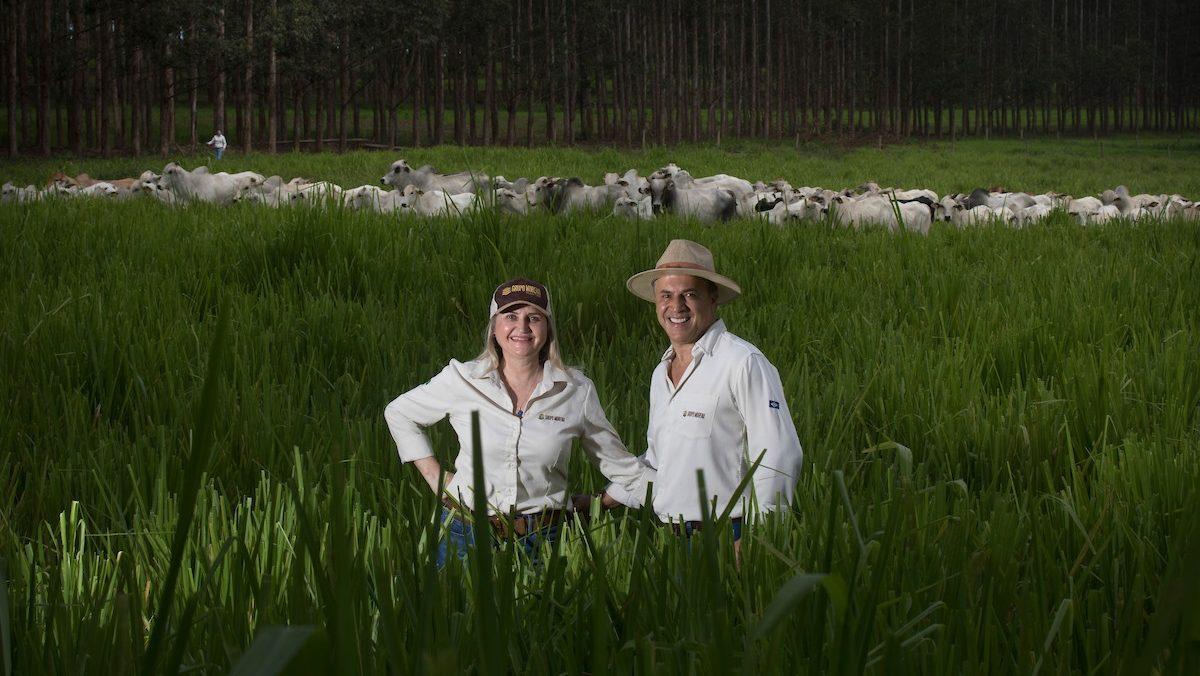
These relationships led me to take up an agricultural production system that integrates crops, livestock, and forestry. I’ve used it for more than twelve years, and I intend to continue doing so because it has made me a better and more sustainable farmer environmentally but also in its social and economic aspects. By growing eucalyptus trees around my crops and pastures, for example, my soil gets the benefit of seeds and leaf litter.
Dr. Hungria is my colleague, collaborator, and partner. We’re always trying to use science and technology to improve farming.
I’m hopeful that we’ll see more progress soon, thanks to the work of Dr. Hungria. If we use microbiology wisely, we may be able to recover degraded pastureland in Brazil and bring it back into production—perhaps even doubling the area available to use for crops and livestock.
The future is bright thanks to Dr. Hungria’s research. It’s even brighter because of the example she sets. Her achievement also demonstrates the quality and seriousness with which the Brazilian agricultural community approaches food supply, production, and sustainability. Her World Food Prize will inspire a new generation of Brazilian scientists, who will see agriculture as an excellent area of specialization—one that can lead to real-world results that improve the lives of farmers and consumers alike.