Sustainability isn’t just a marketing tool for our coffee farm—it’s our management philosophy. As we grow the beans for your favorite morning beverage, every decision we make is guided by the idea that soil, water, people, and coffee are part of one living system.
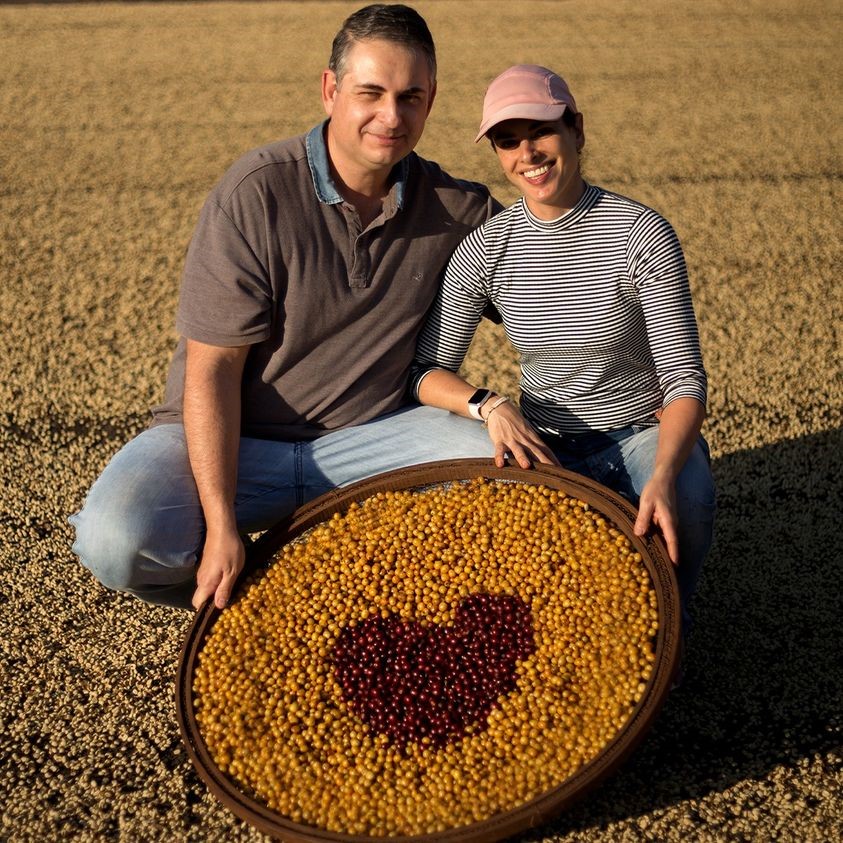
We are humbled to say that last year we received an important recognition for our efforts: Globo Rural magazine named us one of the five most sustainable large farms in Brazil, recognized for our strong commitment to sustainability, innovation, and social responsibility.
That’s a high honor in a nation with a lot of big and professional farms.
We aspire to grow the best coffee at California Coffee Estates, where we enjoy ideal conditions for Arabica beans. Here in the Parana region of Brazil, our plants thrive with a perfect combination of a high latitude (23o S) with an average elevation of about 600 meters, where they benefit from volcanic soil, balanced rainfall, and mild temperatures.
Yet we’re doing so much more than producing coffee beans. We’re combining tradition, science, and responsible cultivation as we seek to become a benchmark for the next generation of regenerative and sustainable agriculture.
But the farm wasn't like this in a near past.
In 2004, we heritage a farm with many problems, and the opportunity of our lives. Only 20 percent of the farm back then was devoted to coffee. It suffered from dense planting, soil compaction, erosion, a lack of mechanization, and low productivity. The rest of the farm was leased for sugarcane cultivation, and it, too, was badly degraded.
We knew that we had to bring this farm back to life. And that’s what we did through a transformative journey of specific actions that are now a part of our standard operations in sustainability.
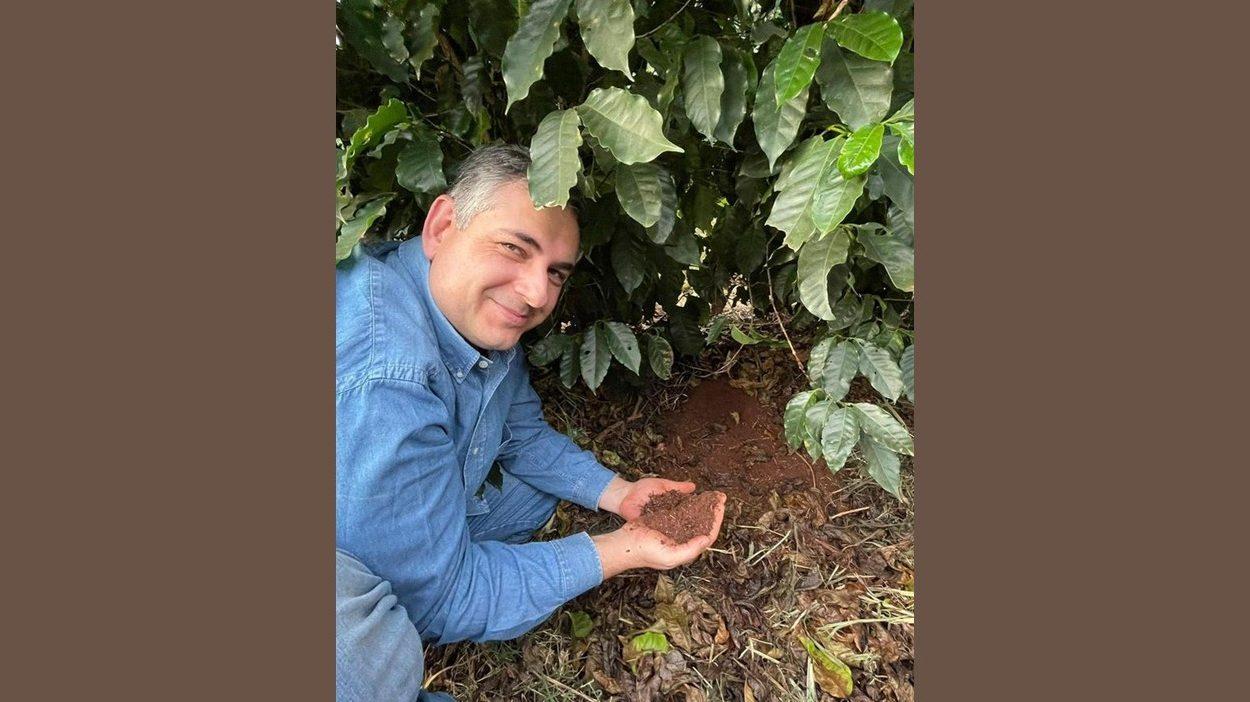
Soil is at the foundation of agriculture. We keep it healthy by planting cover crops between coffee rows. This prevents erosion, fixes nitrogen, encourages aeration, maintains moisture, and attracts pollinators. We also compost all the organic residues from coffee processing—the husks, the pulp and the water—and use it as natural fertilizer. This has allowed us to cut back on chemical fertilizers and to restore soil health naturally.
Water management is essential. In the field, our drip-irrigation system relies on moisture sensors to apply water only when the coffee plants truly need it. In our wet mills, where we turn the cherries we’ve picked from coffee plants into dry beans ready for roasting, we have a closed-loop system that allows us to reuse and recycle water throughout the processing.
We turn to technology whenever it makes sense. Satellites help us monitor plant health. Solar panels and biomass lower our energy costs and reduce our carbon emissions. Even trees are tools, as we plant native species to reduce runoff, protect aquatic life, and provide microclimate enhancement.
We also take care of our people. Workers have formal contracts, access to training, and opportunities for advancement. More women are in leadership positions.
We’ve seen excellent results. Over the past decade, the organic material in our soil has improved by 30 percent. Our water consumption has declined by 40 percent. Best of all, we’re more profitable. Our input costs are down and the quality of our coffee is up.
Sustainability has a price tag. At Fazenda California, however, sustainability is not a cost but an investment in permanence, profitability, and excellence. It requires investments in technology, know-how and training. But it pays off. Up-front costs turn into long-term profitability and a resilient business model.
The American moviemaker Woody Allen once joked that 80 percent of success is just showing up. Our sustainability recognition, however, wasn’t simply a matter of filling out forms and getting lucky. It’s the result of years of consistent, documented work measuring our environmental management, social responsibility, and economic sustainability.
It’s also going to make us better. Through the required self-assessment, the evaluation forced us to measure, document and challenge our own practices. It has helped us identify areas where we think we can do better.
We’ve learned that sustainability is not a destination but a journey. We’re always seeking to improve. Soon, for example, we expect artificial intelligence to forecast disease outbreaks and optimize our water efficiency. We’re also planning to experiment with crop rotation systems and microbiome manipulation to increase soil fertility, reduce pests, enhance biodiversity, decrease chemical inputs and increase coffee quality and plants adaptation to extreme weather conditions.
Ultimately, we hope to create a legacy. We want to leave behind a farm that’s better than the one we inherited—one that regenerates, inspires, and serves as a model for producers in Brazil and beyond. As we say: “In our soil we cultivate the future.”